Cloud Solutions · Pymble
Cloud Solutions Pymble: Business Email Migration Acceptance
Move business email with checks that reflect how your team communicates. Assess mail flow, calendars and shared resources before accepting the destination.
No lock-in · Sydney-based engineers · Response <4h

<4h
Response SLA
Priority response in Pymble
99.9%
Uptime Target
SLA-backed availability
0
Lock-In Contracts
Cancel anytime, no penalties
100%
Australian Team
Local engineers, no offshore
Technology partners and platforms we work with


What we deliver
Cloud Solutions that works while you do.
Everything your Pymble business needs — managed as one seamless service with a fixed monthly price and guaranteed response times.
Last updated: 12 October 2026
Define the email service people need to keep using
An email migration affects more than the messages in individual inboxes. A Pymble business may also rely on shared addresses, calendars, contact lists, phone access and automated notifications. Write down which of these functions the project must preserve before estimating the move. OnIT Solutions provides Exchange Online configuration and mail migration within its cloud services. The useful starting point is a description of the communication your team needs, including work that happens outside the main desktop application.
Ask each department to nominate one person who can describe its mail routines. Find out who responds to enquiries, who books shared resources and which applications send messages on the business's behalf. Include former staff mail that remains relevant and addresses used by occasional workers. Distinguish current requirements from historical clutter. Moving every item without understanding its purpose can preserve confusion, while omitting an apparently quiet address can break an important customer or supplier communication path.
Make the source inventory explain the destination
Record each mailbox, its owner, aliases, shared access and intended destination. Review the source with the people who know how it is used. A display name is not sufficient identification when several accounts have similar labels. Note delegated access and resource calendars explicitly rather than assuming they travel with messages. Where older archives exist on devices, identify them as a separate source and decide whether they belong in the agreed migration scope.
Compare the inventory with destination accounts before copying begins. Confirm naming decisions, licence assumptions and who will approve exceptions. If the business is also changing its domain, treat that as another workstream with its own dependencies. Ask how the migration method handles each required data type and what it cannot move. Record the answer as a project limitation. This gives the acceptance group a fair basis for judging results rather than discovering exclusions after cutover.

Use a pilot to uncover real communication problems
Select users who represent different working patterns, including someone who uses a shared mailbox and someone who works away from the office. Agree a test record for each person. They should send and receive suitable sample messages, find nominated older mail, check calendar entries and use the devices included in scope. Test replies from relevant shared addresses as well as personal mail. A successful login does not demonstrate that the person can resume their role.
Keep a record of expected results, actual results and the identity used for each test. Use non-sensitive material where possible. If a test fails, establish whether the cause is migrated data, destination permissions, device setup or a separate application dependency. Those problems require different fixes. Repeat the affected business task after correction and retain the outcome. The pilot should produce a decision about readiness, not simply a list of accounts that have been created.
Coordinate the final change and the support window
Agree when users stop making source changes, what final data movement is expected and who may authorise the mail routing change. The schedule should account for business commitments and the availability of people who manage the domain. Explain which application staff should use during each stage. A short plain-language notice is more useful than a technical cutover document that leaves employees guessing whether their old inbox is still the right place to work.
Arrange a route for reporting missing mail, incorrect calendar behaviour or device sign-in issues. Ask staff to record the time, affected address and observable result without forwarding confidential content unnecessarily. Identify who decides whether a fault is an isolated support issue or a reason to pause the broader change. Any rollback discussion should consider messages received or sent in the destination. Reconciliation may be needed; returning settings alone does not account for new business activity.

Judge acceptance using evidence from both sides
Acceptance should combine migration reports with user checks. Review reported failures, exceptions and the agreed comparison of source and destination data. Counts can help locate gaps but cannot prove that a particular appointment or shared folder works. Ask the nominated users to complete the communication tasks defined at the start. Record issues that are acceptable for later resolution separately from those that prevent ordinary business use. The sponsor should know which category each remaining item occupies.
Do not retire the source merely because the calendar says the project is complete. Confirm the approved observation period, recovery arrangements and who has authorised closure. Retain required records through an agreed process, considering any business obligations that need specialist advice. Remove unnecessary access and update support documentation once the final destination is established. The evidence should explain what was moved, what was deliberately excluded and where staff can obtain help with their new email environment.
Bring a practical Pymble migration brief
Prepare your current mail provider, approximate mailbox inventory, shared addresses, devices and known application senders. Explain the work periods when disruption would be especially difficult. Discuss these details through OnIT's cloud solutions team and ask for the proposed checks alongside the delivery scope. A plan that names the acceptance users and their tasks is easier to assess than one that promises a move without describing how the business will verify it.
Where staff need continued assistance after the project, align the handover with IT support. Clarify who handles device issues, mailbox administration and third-party mail applications. Your Pymble team should finish with an agreed working email service and a readable exception register. Keep the original task list for future changes, so a new shared address or application sender can be assessed against the same business expectations instead of becoming an undocumented dependency.
Quick Facts
“For Pymble businesses, cloud solutions isn't just about keeping things running — it's about building a technology foundation that drives growth across North Shore.”
— OnIT Solutions, North Shore
What's included
Cloud Solutions in Pymble. One team.
Microsoft 365 Management
Full lifecycle management of Exchange, Teams, SharePoint, and OneDrive — deployment, security, and optimisation.
Azure Cloud Infrastructure
Design, deploy, and manage Azure environments tailored to your workloads — VMs, networking, and storage.
Zero-Downtime Migrations
Move from on-prem or legacy cloud to Microsoft 365 and Azure with zero disruption to your team.
Cloud Security & Compliance
Entra ID, conditional access, Defender, and MFA — enterprise security configured for your environment.
Service detail
Your entire cloud, one team
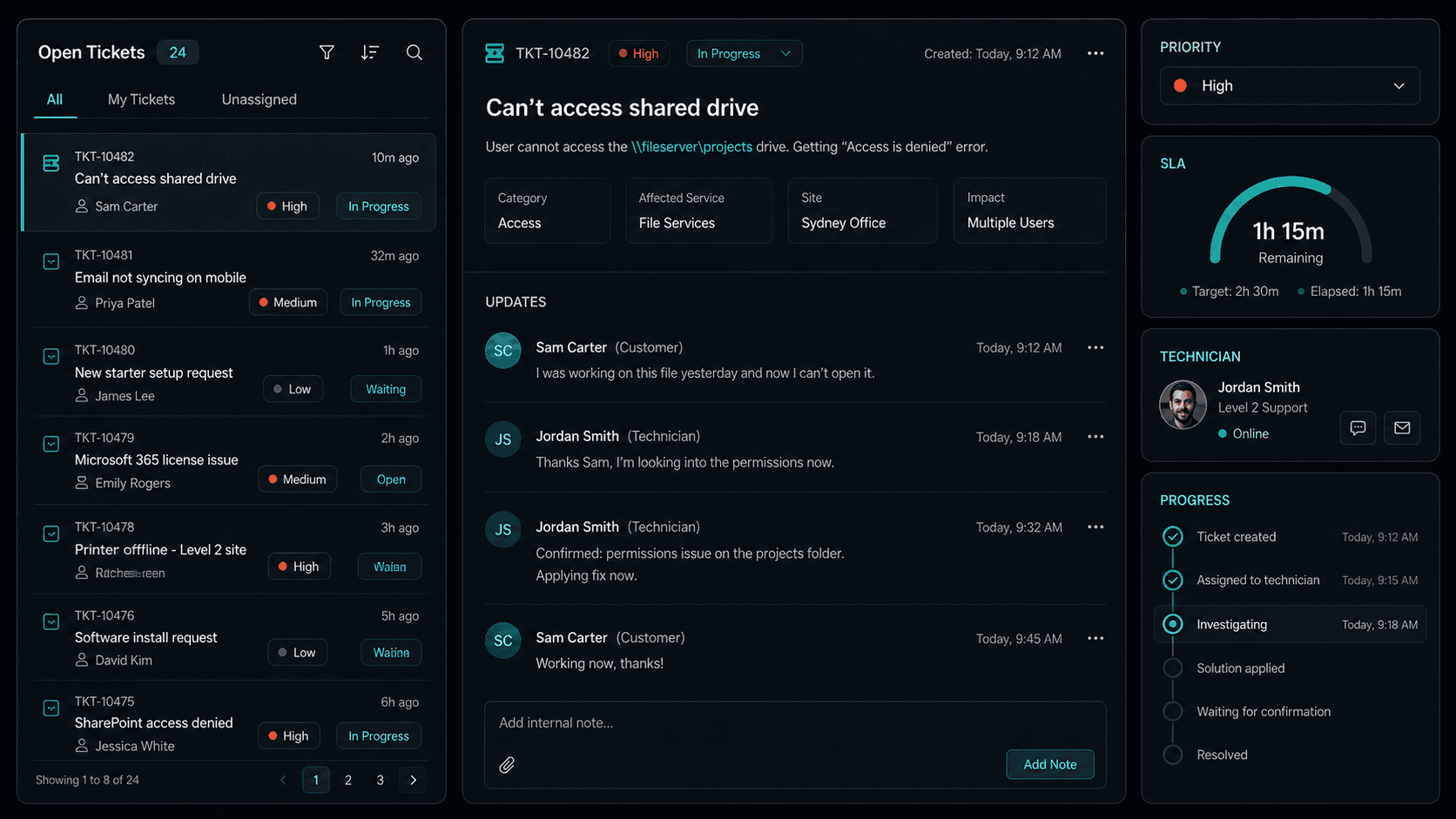
Licence management, user provisioning, Teams, SharePoint, Exchange, and Intune — your entire Microsoft ecosystem managed.
Virtual machines, storage, networking, and Azure AD — designed, deployed, and maintained to best-practice standards.
Lift-and-shift or full re-architect migrations from on-premise to Azure or Microsoft 365 — zero downtime, fully tested.
EC2, S3, RDS, Lambda, and CloudFront — multi-cloud architectures built for performance, cost, and compliance.
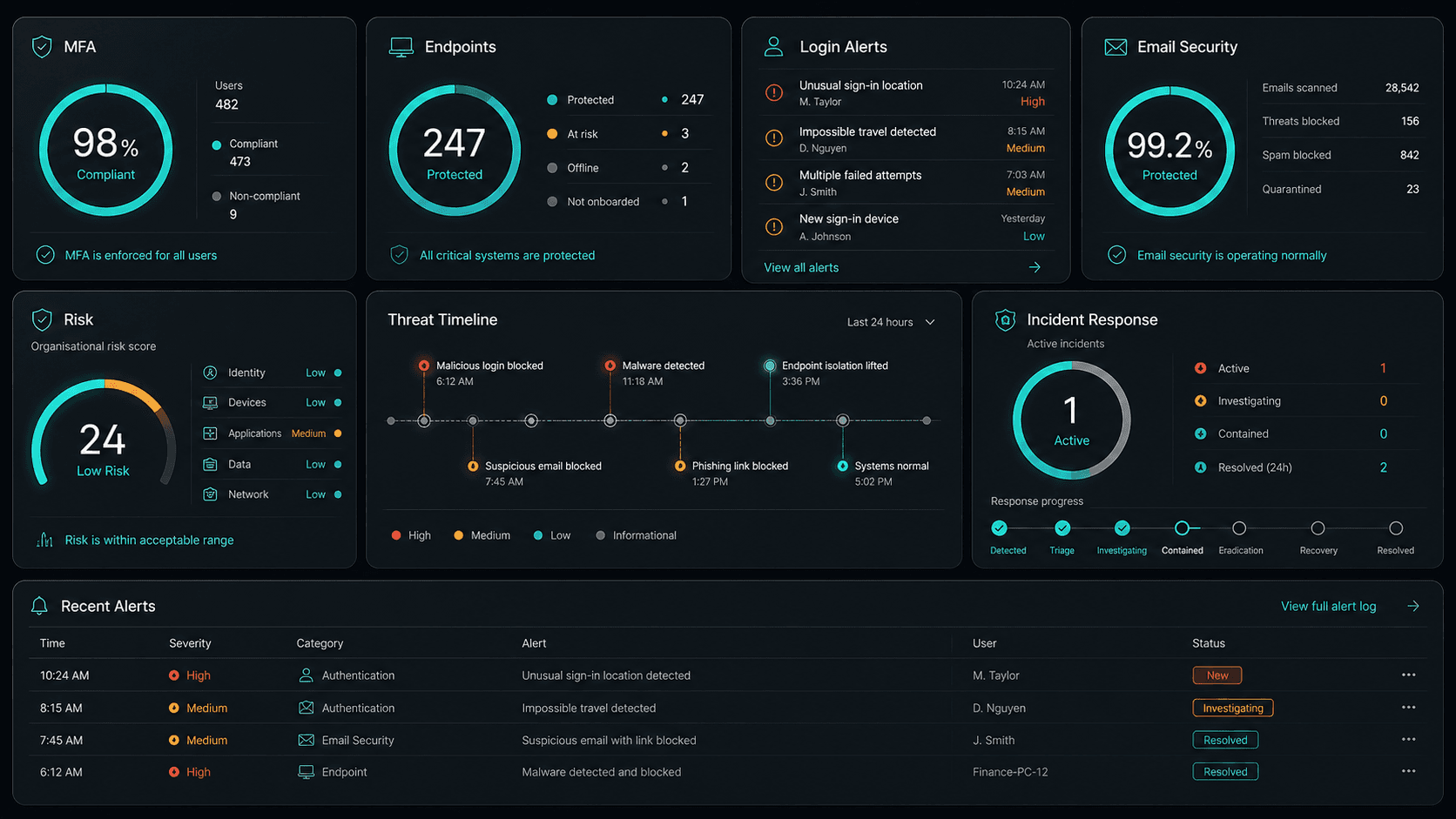
Defender for Cloud, conditional access, MFA, and Entra ID — enterprise security posture maintained across your cloud estate.
Automated cloud backup with point-in-time restore. DR runbooks tested annually — RTO and RPO targets met.
Monthly licence and resource reviews to eliminate waste — reserved instances, right-sizing, and savings plan recommendations.
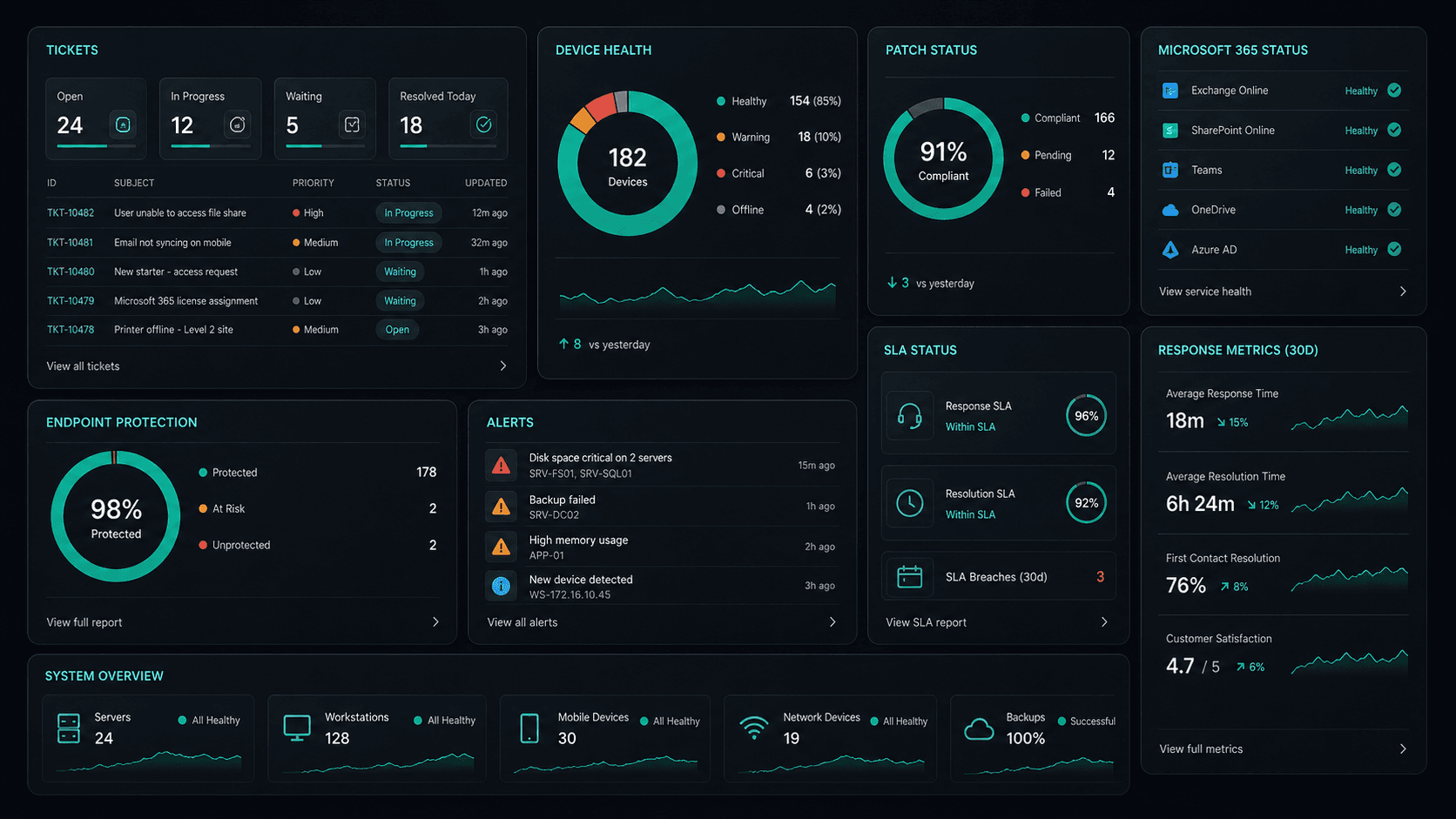
Uptime, performance, and security alerts across your cloud — issues detected and actioned before they impact the business.
Why OnIT
Everything in one cloud service
One provider. One invoice. Microsoft 365, Azure, migrations, and security — all managed.
Full cloud visibility
Monitor licences, usage, and spend across your Microsoft cloud — with monthly reviews to optimise costs.
Microsoft cloud specialists
Microsoft 365, Azure, Exchange, Teams, SharePoint, Entra ID — your entire Microsoft ecosystem, fully managed.


Sydney-based cloud team
Local cloud engineers across Greater Sydney. On-site workshops, remote support, and 24/7 monitoring.
Cloud security baseline
Defender, MFA, conditional access, and Entra ID — enterprise security configured and maintained by our team.




Technology Ecosystem
Powered by Enterprise Technology
A constellation of best-in-class platforms, deployed and managed as one seamless service.
Service Breakdown
What's inside your plan
Click any card to see exactly what's included in each service area.

Cloud Solutions that scales from 5 to 200 seats, across every North Shore business.
Why OnIT Solutions
Your Pymble business, without the overhead.
Serving Pymble (2073) and the broader North Shore area — our Sydney-based engineers understand the North Shore business community and are reachable when you need them. Whether you're a 5-person team or a growing operation with 200 seats, we scale cloud solutions to fit.
By the numbers
Measurable outcomes, guaranteed in writing
No surprise invoices. No waiting on hold. No different technician every time you call.
At a Glance
Included in your plan
Got questions?
Frequently asked questions
Also serving nearby
Cloud Solutions across North Shore
Explore further
Related services for Pymble
Cybersecurity
Threat monitoring, Essential Eight compliance, and endpoint detection — keeping your business secure around the clock.
IT Support Sydney
On-demand helpdesk and on-site support for your team. Fast response, local engineers, no lock-in contracts.
AI Automation
Workflow automation, AI chatbots and voice agents that reduce admin and free your team to focus on growth.

Get started
Ready for better Cloud Solutions
in Pymble?
Book a free cloud solutions assessment with one of our Sydney-based engineers serving Pymble and North Shore. No lock-in, no obligation.
No lock-in contracts · Sydney-based engineers · Same-day response