Cloud Solutions · Kellyville
Cloud Solutions Kellyville: Device Readiness for Cloud Access
Check the devices your team will use before expanding cloud access. Test business applications, account setup and local information handling through a practical readiness review.
No lock-in · Sydney-based engineers · Response <4h

<4h
Response SLA
Priority response in Kellyville
99.9%
Uptime Target
SLA-backed availability
0
Lock-In Contracts
Cancel anytime, no penalties
100%
Australian Team
Local engineers, no offshore
Technology partners and platforms we work with


What we deliver
Cloud Solutions that works while you do.
Everything your Kellyville business needs — managed as one seamless service with a fixed monthly price and guaranteed response times.
Last updated: 12 October 2026
Define the supported device experience
A Kellyville business moving more work into cloud applications still depends on the devices people use to reach them. Begin by describing the supported experience for each role: browser tasks, installed applications, calls, scanning or offline documents where needed. OnIT's cloud services include Microsoft 365 onboarding and access planning. The readiness review should connect the device with those tasks rather than assume that purchasing a subscription makes every existing computer suitable for the new working model.
Identify which devices are business-owned and which are personal or shared. Record the intended users and the support boundary for each group. A shared workstation may need a different sign-in process from a dedicated laptop, and occasional access may need separate assessment. Avoid collecting unnecessary personal information during discovery. The relevant facts are the equipment, applications and operating conditions that affect the approved business work, with a clear owner for decisions about exceptions.
Build an inventory that helps make a readiness decision
Record device type, operating environment, required applications and current maintenance responsibility. Note equipment that is missing support information or already has unresolved faults. Ask the technical provider to assess compatibility against current supplier requirements for the intended services. Do not rely on an old minimum specification or the fact that the device worked with a previous application. Cloud tasks can still depend on local software, browser support and the way the device is maintained.
Group devices by relevant working pattern so the pilot can represent them sensibly. Include specialist peripherals and locations where connectivity differs. Record what can be checked remotely and what may need direct inspection. Keep uncertain details as open items rather than marking the whole estate ready from a partial sample. The inventory should show which devices can proceed, which need further assessment and who will decide whether remediation or replacement is appropriate for the business.

Confirm the right account reaches the right environment
Test the intended business identity on the device and confirm that it opens the correct cloud environment. Staff may have older work accounts or personal accounts in the same application. Explain how to recognise the approved identity and where to obtain help. Review the sign-in and recovery process with the technical operator. Keep authentication secrets out of tickets and readiness spreadsheets. The user should be able to follow the supported process without borrowing a colleague's account to get started.
Check the permissions needed for the person's role and the visibility of relevant shared information. An administrator's successful sign-in does not establish that ordinary staff can work. Where the setup requires a device management or access condition, assess that condition for the actual service and licence. Record limitations rather than claiming a generic configuration guarantees security. The readiness result should describe the tested identity and tasks, with business approval for any temporary exception to the normal supported arrangement.
Test local behaviour as well as cloud availability
Have a pilot user open representative content, make an authorised change and save the expected result. Include printing, scanning, calls or specialist application handoffs if they belong to the role. Ask where downloads and temporary files appear, and whether that matches the business's information handling expectations. A task may work in the browser while creating local copies that need deliberate management. Discuss those copies as part of the operating design rather than leaving staff to discover the boundary themselves.
If offline use is required, verify the specific task and the return to connectivity. Check how the user recognises unsaved or unsynchronised work. Record device performance concerns with observable detail so the support team can investigate. Avoid accepting a device solely because it eventually completed a task under ideal test conditions. The pilot should reflect ordinary use well enough for the business to judge whether the experience is practical, with known limits and an appropriate support route.

Set remediation and acceptance criteria
For each readiness gap, assign an owner, proposed action and follow-up test. Separate application configuration, account problems, connection issues and equipment faults because their support paths may differ. The business should approve any required purchases or changed working process through its normal route. A temporary workaround needs a defined scope and review point. Do not silently make an exception permanent merely because it allowed the pilot user to finish the first demonstration.
Accept devices or groups against the agreed task list and recorded evidence. Keep untested combinations visible, particularly personal equipment or unusual peripherals outside the main sample. Update staff instructions and support records when the final arrangement is confirmed. Review readiness when an application changes significantly or equipment is replaced. The original project assessment is a starting baseline, not a perpetual statement that every future cloud task will work on the same devices without further checking.
Prepare a Kellyville cloud device review
Bring your device list, role requirements and known support issues. Discuss access planning through OnIT's cloud solutions service and device assistance through IT support. Ask the scope to identify the pilot sample, acceptance tasks and responsibility for remediation. Include a business owner who can approve changes to equipment or working practices. This keeps the review focused on usable work rather than producing a technical inventory with no route to resolve its findings.
Your Kellyville team should know which devices are supported, how to use the correct account and where to report a fault. Retain the readiness evidence with the operating records and update it as the environment changes. A sound rollout aligns the cloud service with the device and the person using it. That alignment makes access decisions clearer and gives support staff a reliable baseline, while leaving explicit limits for combinations that have not yet been assessed or accepted.
Quick Facts
“For Kellyville businesses, cloud solutions isn't just about keeping things running — it's about building a technology foundation that drives growth across Hills District.”
— OnIT Solutions, Hills District
What's included
Cloud Solutions in Kellyville. One team.
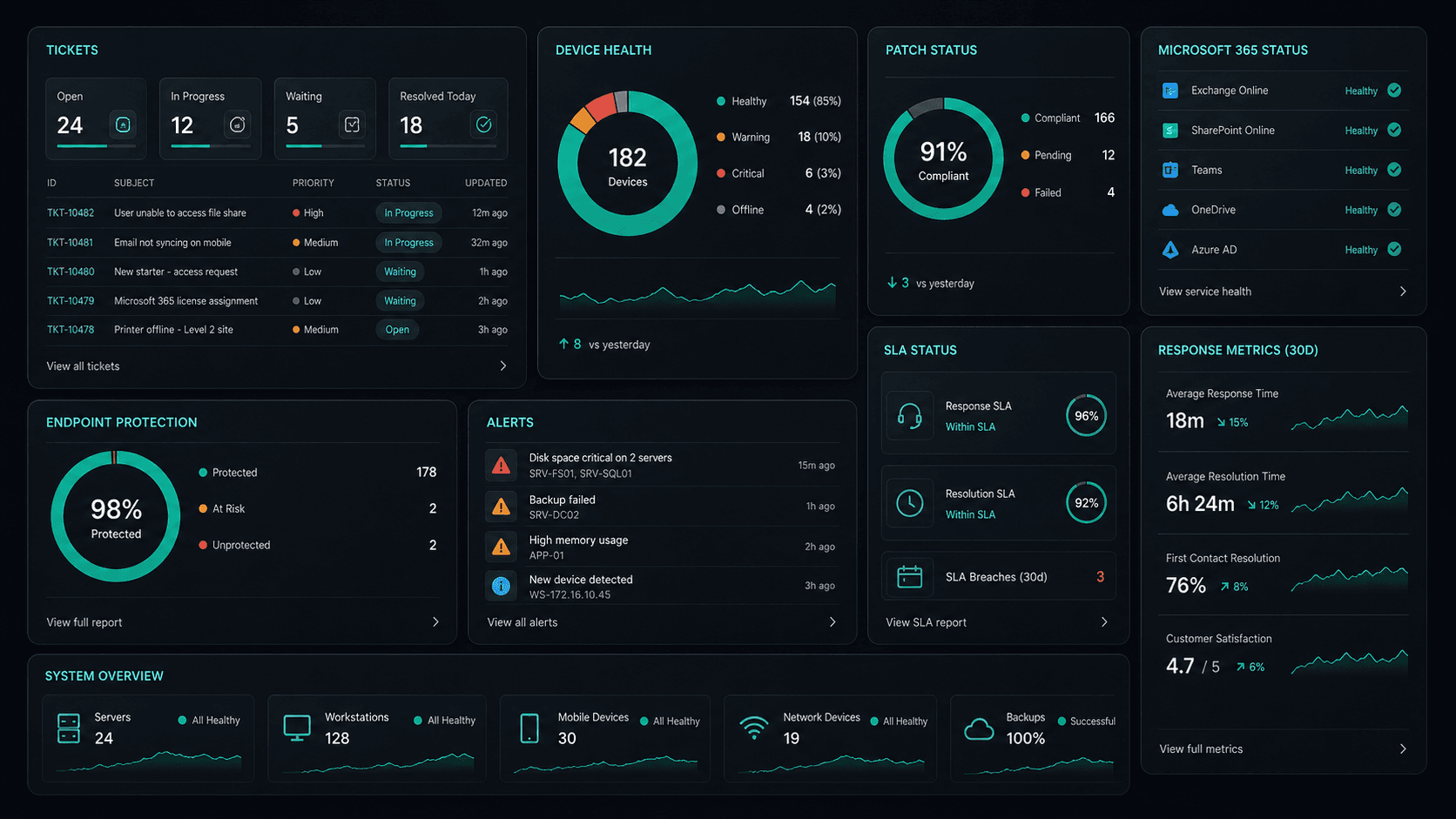
Microsoft 365 Management
Full lifecycle management of Exchange, Teams, SharePoint, and OneDrive — deployment, security, and optimisation.
Azure Cloud Infrastructure
Design, deploy, and manage Azure environments tailored to your workloads — VMs, networking, and storage.
Zero-Downtime Migrations
Move from on-prem or legacy cloud to Microsoft 365 and Azure with zero disruption to your team.
Cloud Security & Compliance
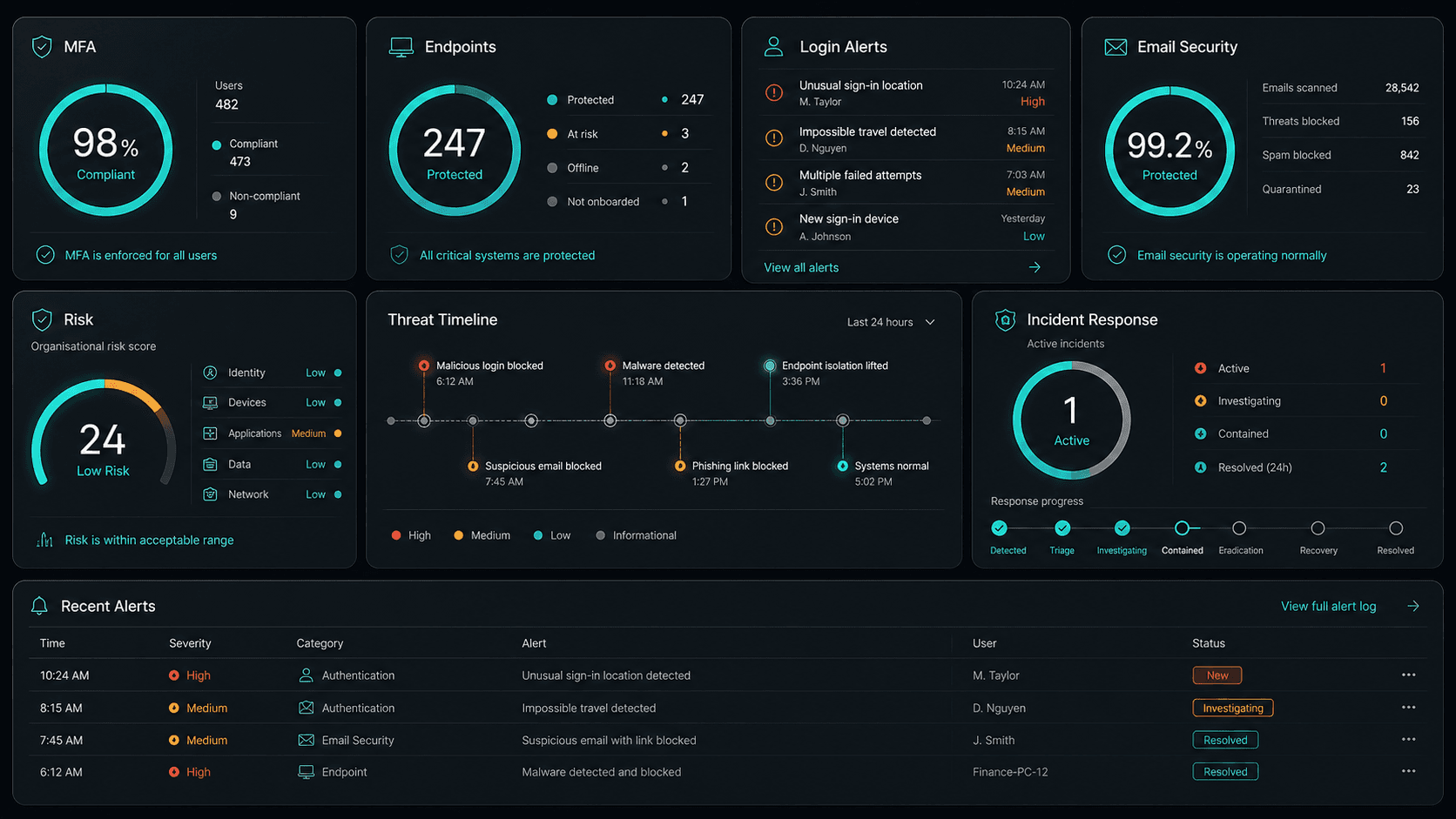
Entra ID, conditional access, Defender, and MFA — enterprise security configured for your environment.
Service detail
Your entire cloud, one team
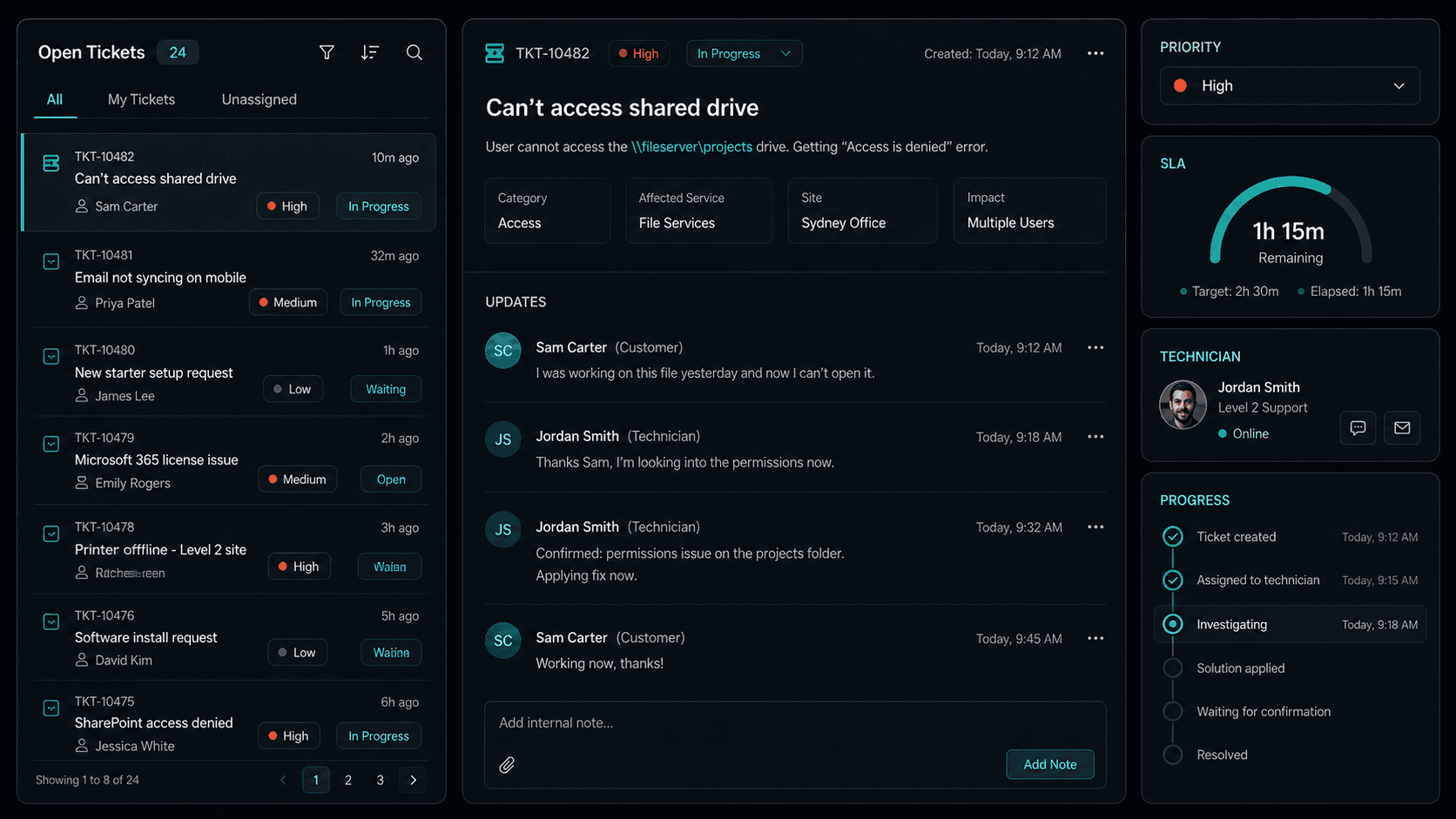
Licence management, user provisioning, Teams, SharePoint, Exchange, and Intune — your entire Microsoft ecosystem managed.
Virtual machines, storage, networking, and Azure AD — designed, deployed, and maintained to best-practice standards.
Lift-and-shift or full re-architect migrations from on-premise to Azure or Microsoft 365 — zero downtime, fully tested.
EC2, S3, RDS, Lambda, and CloudFront — multi-cloud architectures built for performance, cost, and compliance.
Defender for Cloud, conditional access, MFA, and Entra ID — enterprise security posture maintained across your cloud estate.
Automated cloud backup with point-in-time restore. DR runbooks tested annually — RTO and RPO targets met.
Monthly licence and resource reviews to eliminate waste — reserved instances, right-sizing, and savings plan recommendations.
Uptime, performance, and security alerts across your cloud — issues detected and actioned before they impact the business.
Why OnIT
Everything in one cloud service
One provider. One invoice. Microsoft 365, Azure, migrations, and security — all managed.
Full cloud visibility
Monitor licences, usage, and spend across your Microsoft cloud — with monthly reviews to optimise costs.
Microsoft cloud specialists
Microsoft 365, Azure, Exchange, Teams, SharePoint, Entra ID — your entire Microsoft ecosystem, fully managed.


Sydney-based cloud team
Local cloud engineers across Greater Sydney. On-site workshops, remote support, and 24/7 monitoring.
Cloud security baseline
Defender, MFA, conditional access, and Entra ID — enterprise security configured and maintained by our team.




Technology Ecosystem
Powered by Enterprise Technology
A constellation of best-in-class platforms, deployed and managed as one seamless service.
Service Breakdown
What's inside your plan
Click any card to see exactly what's included in each service area.

Cloud Solutions that scales from 5 to 200 seats, across every Hills District business.
Why OnIT Solutions
Your Kellyville business, without the overhead.
Serving Kellyville (2155) and the broader Hills District area — our Sydney-based engineers understand the Hills District business community and are reachable when you need them. Whether you're a 5-person team or a growing operation with 200 seats, we scale cloud solutions to fit.
By the numbers
Measurable outcomes, guaranteed in writing
No surprise invoices. No waiting on hold. No different technician every time you call.
At a Glance
Included in your plan
Got questions?
Frequently asked questions
Also serving nearby
Cloud Solutions across Hills District
Explore further
Related services for Kellyville
Cybersecurity
Threat monitoring, Essential Eight compliance, and endpoint detection — keeping your business secure around the clock.
IT Support Sydney
On-demand helpdesk and on-site support for your team. Fast response, local engineers, no lock-in contracts.
AI Automation
Workflow automation, AI chatbots and voice agents that reduce admin and free your team to focus on growth.

Get started
Ready for better Cloud Solutions
in Kellyville?
Book a free cloud solutions assessment with one of our Sydney-based engineers serving Kellyville and Hills District. No lock-in, no obligation.
No lock-in contracts · Sydney-based engineers · Same-day response