Web Development · Annandale
Web Development Annandale: Choose a CMS You Can Operate
The right CMS fits both the website and the people responsible for running it. Compare actual editing tasks and operating obligations before choosing a platform from its feature list alone.
No lock-in · Sydney-based engineers · Response <4h

<4h
Response SLA
Priority response in Annandale
99.9%
Uptime Target
SLA-backed availability
0
Lock-In Contracts
Cancel anytime, no penalties
100%
Australian Team
Local engineers, no offshore
Technology partners and platforms we work with


What we deliver
Web Development that works while you do.
Everything your Annandale business needs — managed as one seamless service with a fixed monthly price and guaranteed response times.
Last updated: 14 October 2026
Start with the publishing work your team performs
For an Annandale business choosing a website CMS, begin with the changes staff need to make after launch. Service copy, staff details, articles, images and reusable contact information can require different editing structures. OnIT Solutions provides CMS-based website builds, including established options such as WordPress, Sanity and Contentful. The platform decision should follow the requirements of the website and its operators. Familiar branding or a long feature list is less useful than evidence that the selected arrangement supports the actual publishing work the business expects to do.
Collect a few realistic editing examples and identify how often each occurs. Ask who prepares the material, who approves it and whether the change affects one page or many. A small team updating occasional service text may value a simple, bounded interface. A team maintaining several content types may need more structured relationships and review stages. Avoid assuming that more configurable fields always make self-management easier. The editor should understand the meaning of a change and its public effect without needing to reconstruct the website's internal implementation.
Compare the content model as well as the editing screen
Decide which information should be stored once and reused. Contact details, service names and shared calls to action can become inconsistent when copied into many independent pages. A structured content model can reduce repetition, but it also needs clear ownership because changing one item may affect several destinations. Demonstrate those relationships to editors. They should know whether they are editing a local paragraph, a reusable content record or a global setting before approving an update that may appear throughout the site.
Consider how the model will handle expected growth without building speculative complexity. Adding another service, author or article category should follow an understandable pattern. At the same time, do not create dozens of rarely used fields in anticipation of every possible future feature. Review sample content in the proposed model and look for awkward workarounds, such as storing meaningful information in an unrelated field because there is no suitable place for it. Those workarounds can make later redesigns, search features and content reuse unnecessarily difficult.

Make platform responsibilities explicit
A CMS choice includes operational work beyond editing. Hosting, account administration, software updates, backups, integrations and support need named responsibilities under the selected arrangement. The exact division differs between implementations and service plans, so it should be written into the proposal rather than inferred from a platform name. Ask which components the business manages, which are handled by the provider and what third-party agreements remain necessary. A platform can be appropriate while the surrounding operating arrangement is incomplete.
Review access and continuity. The business should understand which accounts it owns, who holds administrative access and how authorised staff regain control when personnel change. Avoid relying on one employee's private email address or an undocumented developer account as the only way to administer a critical service. Agree how credentials are transferred securely and how staff request assistance. Keep sensitive recovery material separate from general handover instructions, while ensuring the operational documentation explains where authorised people can obtain the necessary access.
Test a representative publishing journey before commitment
Ask for a demonstration using content similar to yours. Have an editor amend a service paragraph, replace an image, preview the page and complete the expected publication process. Check how validation prevents missing required information or an unsuitable upload. If approvals matter, follow a draft through review with the actual roles involved. A polished demonstration by an expert can conceal friction that appears when ordinary staff use the platform. The test should expose that friction while there is still an opportunity to adjust the configuration.
Include correction and recovery in the exercise. Editors need to understand how to fix a mistaken change, identify what was published and obtain help when a page does not update as expected. Check how preview differs from the public site and what happens when publication triggers a build or another processing step. Record limitations rather than assuming every CMS feature is included in the configured implementation. Acceptance concerns the system being delivered, with its chosen settings and integrations, not every capability advertised by the platform vendor.

Plan handover and future change without lock-in assumptions
Keep a record of the content model, custom components, integrations and operating contacts. Ask how content can be exported or transferred if the business later changes its website arrangement. An export alone may not reproduce the full site because templates, media relationships and custom behaviour can also matter. Understand what is portable and what would need rebuilding. This does not require choosing the most complicated platform; it requires clear expectations about ownership, dependencies and the work involved in a future change.
Bring your common editing tasks and support expectations to OnIT's web development service when planning an Annandale website. Compare the proposed CMS configuration against those tasks and agree the training and operational documentation included in handover. Choose an arrangement the team can maintain with the available skills and support. The best decision is the one that makes publishing reliable and responsibilities understandable for this business, while leaving a documented path for future improvements as its content and operating needs evolve.
Quick Facts
“For Annandale businesses, web development isn't just about keeping things running — it's about building a technology foundation that drives growth across Inner West.”
— OnIT Solutions, Inner West
What's included
Web Development in Annandale. One team.
Custom Website Design
Bespoke designs built to your brand — no templates, no compromises. Every site is unique to your business.
SEO-First Architecture
SEO isn't an afterthought — site structure, speed, and schema are engineered for search from day one.
Core Web Vitals Optimised
Fast-loading, accessible, and mobile-first. Every site meets Google's performance standards out of the box.
CMS & Self-Management
Built on modern CMS platforms (Sanity, Contentful, WordPress) so your team can update content without a developer.
Service detail
Websites built to perform
Bespoke designs built to your brand — not templates. Every layout crafted for conversion and mobile-first performance.
Modern tech stack: Next.js, React, Tailwind CSS, and TypeScript — fast, scalable, and maintainable from day one.
Search-first structure: schema markup, canonical URLs, Core Web Vitals, and meta optimisation baked into every build.
Sanity, WordPress, or headless CMS — content your team can update without a developer.
Shopify, WooCommerce, and custom storefronts — product pages, checkout flows, and inventory integrations.
Green Core Web Vitals scores, lazy loading, image optimisation, and CDN configuration — fast on every device.
GA4, Tag Manager, conversion tracking, and heatmaps — full visibility into how visitors interact with your site.
Security patches, dependency updates, uptime monitoring, and feature development — your site stays fast and secure.
Why OnIT
Everything in one web development service
One team. One fixed scope. SEO-first design, fast delivery, and ongoing management — all included.
SEO architecture from day one
Every site is built with search in mind — page structure, meta tags, schema markup, and Core Web Vitals optimised.
Modern tech stack
Next.js, React, Tailwind, Sanity, WordPress — we build on platforms that scale with your business.


Sydney-based design team
Local designers and developers who understand your market — with face-to-face workshops available.
Fast, accessible, mobile-first
Every site scores green on Core Web Vitals — fast loading, responsive, and accessible on every device.
Service Breakdown
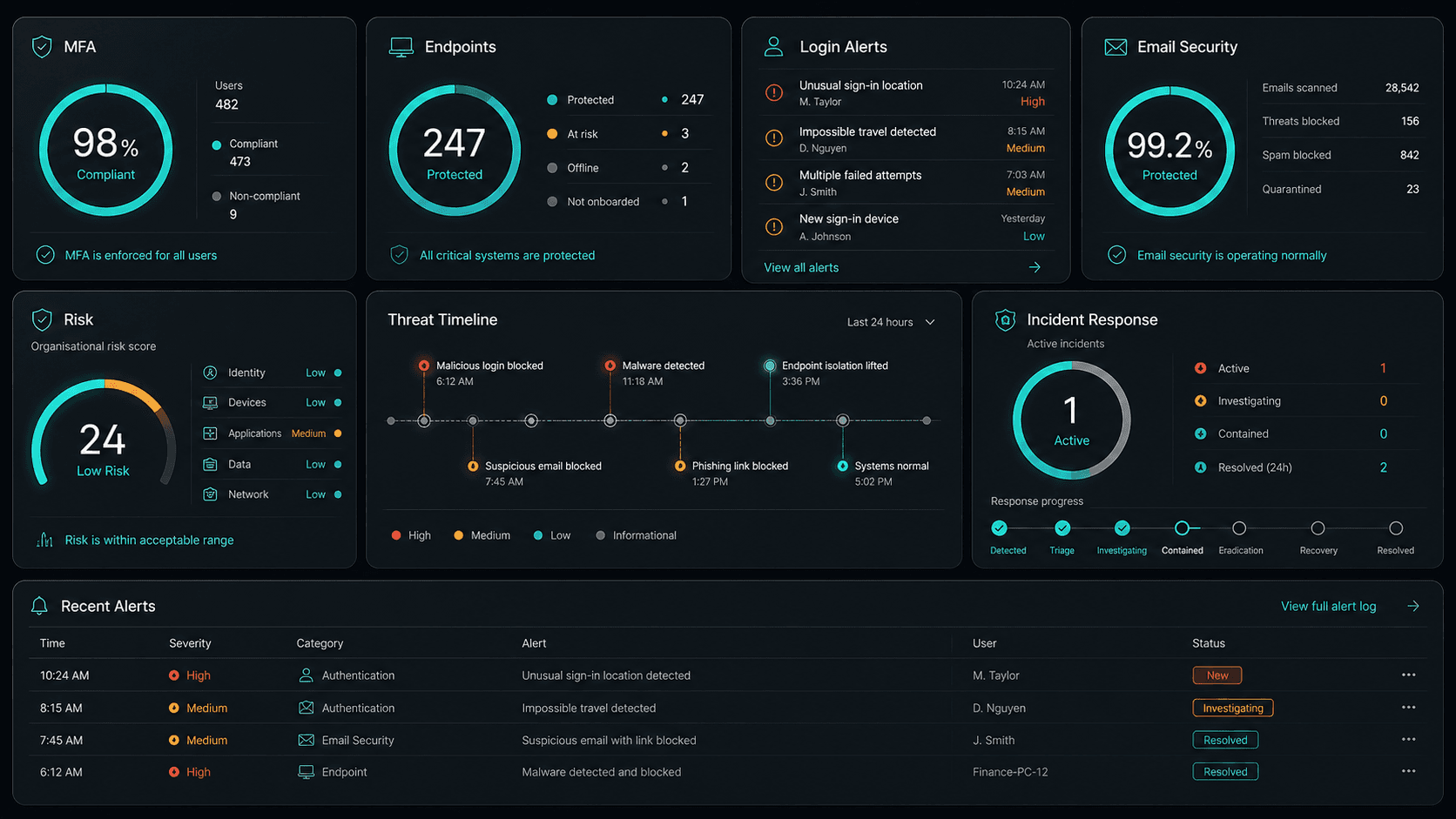
What's inside your plan
Click any card to see exactly what's included in each service area.

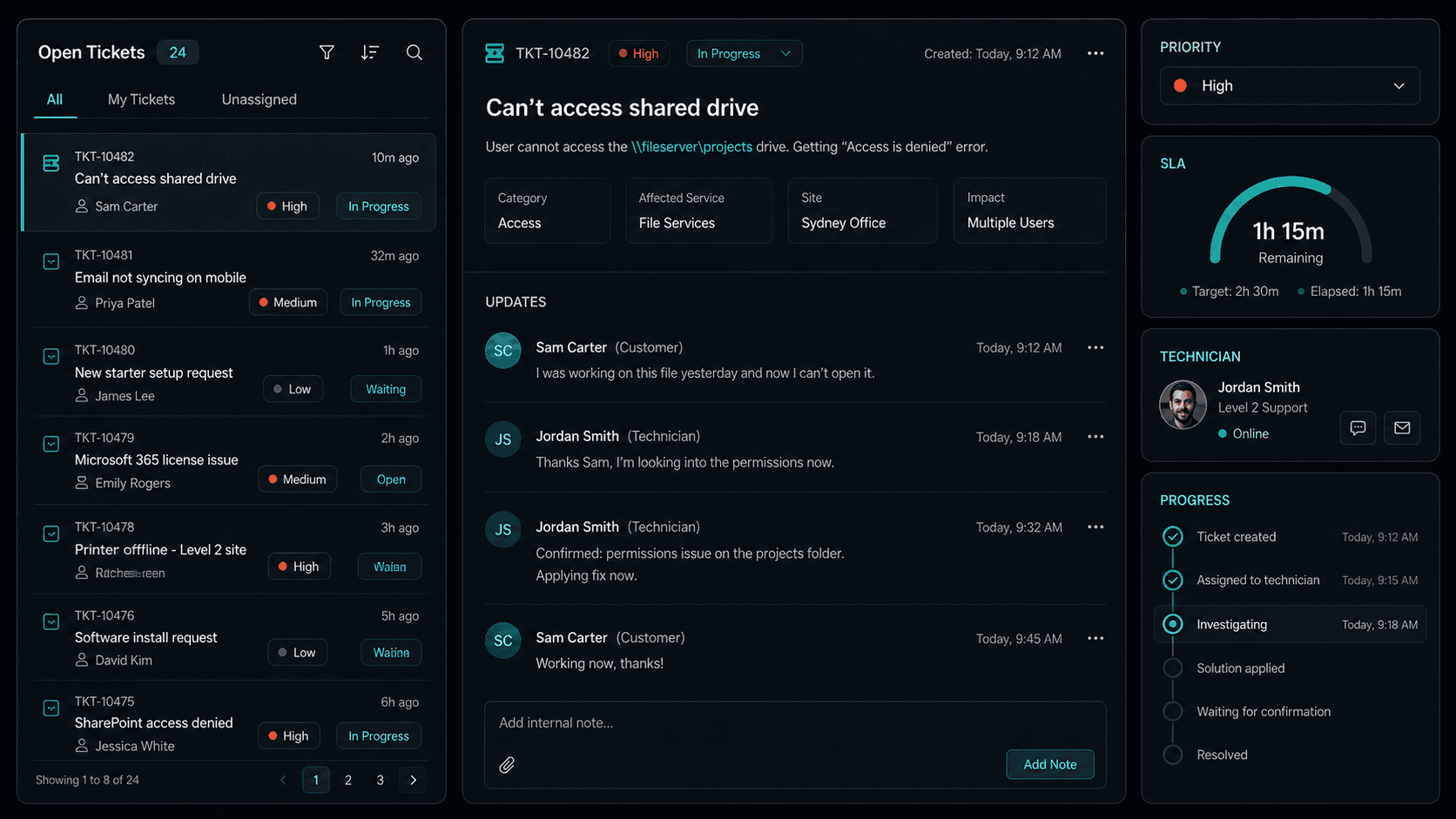
Web Development that scales from 5 to 200 seats, across every Inner West business.
Why OnIT Solutions
Your Annandale business, without the overhead.
Serving Annandale (2038) and the broader Inner West area — our Sydney-based engineers understand the Inner West business community and are reachable when you need them. Whether you're a 5-person team or a growing operation with 200 seats, we scale web development to fit.
By the numbers
Measurable outcomes, guaranteed in writing
No surprise invoices. No waiting on hold. No different technician every time you call.
At a Glance
Included in your plan
Got questions?
Frequently asked questions
Also serving nearby
Web Development across Inner West
Explore further
Related services for Annandale
Cybersecurity
Threat monitoring, Essential Eight compliance, and endpoint detection — keeping your business secure around the clock.
IT Support Sydney
On-demand helpdesk and on-site support for your team. Fast response, local engineers, no lock-in contracts.
AI Automation
Workflow automation, AI chatbots and voice agents that reduce admin and free your team to focus on growth.

Get started
Ready for better Web Development
in Annandale?
Book a free web development assessment with one of our Sydney-based engineers serving Annandale and Inner West. No lock-in, no obligation.
No lock-in contracts · Sydney-based engineers · Same-day response