AI Strategy · Pennant Hills
AI Strategy Pennant Hills: Align the People Who Decide
An AI project needs more than agreement that the idea is interesting. Bring the people who own the work, information and operating decisions into a shared account of what will be tested.
No lock-in · Sydney-based engineers · Response <4h

<4h
Response SLA
Priority response in Pennant Hills
99.9%
Uptime Target
SLA-backed availability
0
Lock-In Contracts
Cancel anytime, no penalties
100%
Australian Team
Local engineers, no offshore
Technology partners and platforms we work with







What we deliver
AI Strategy that works while you do.
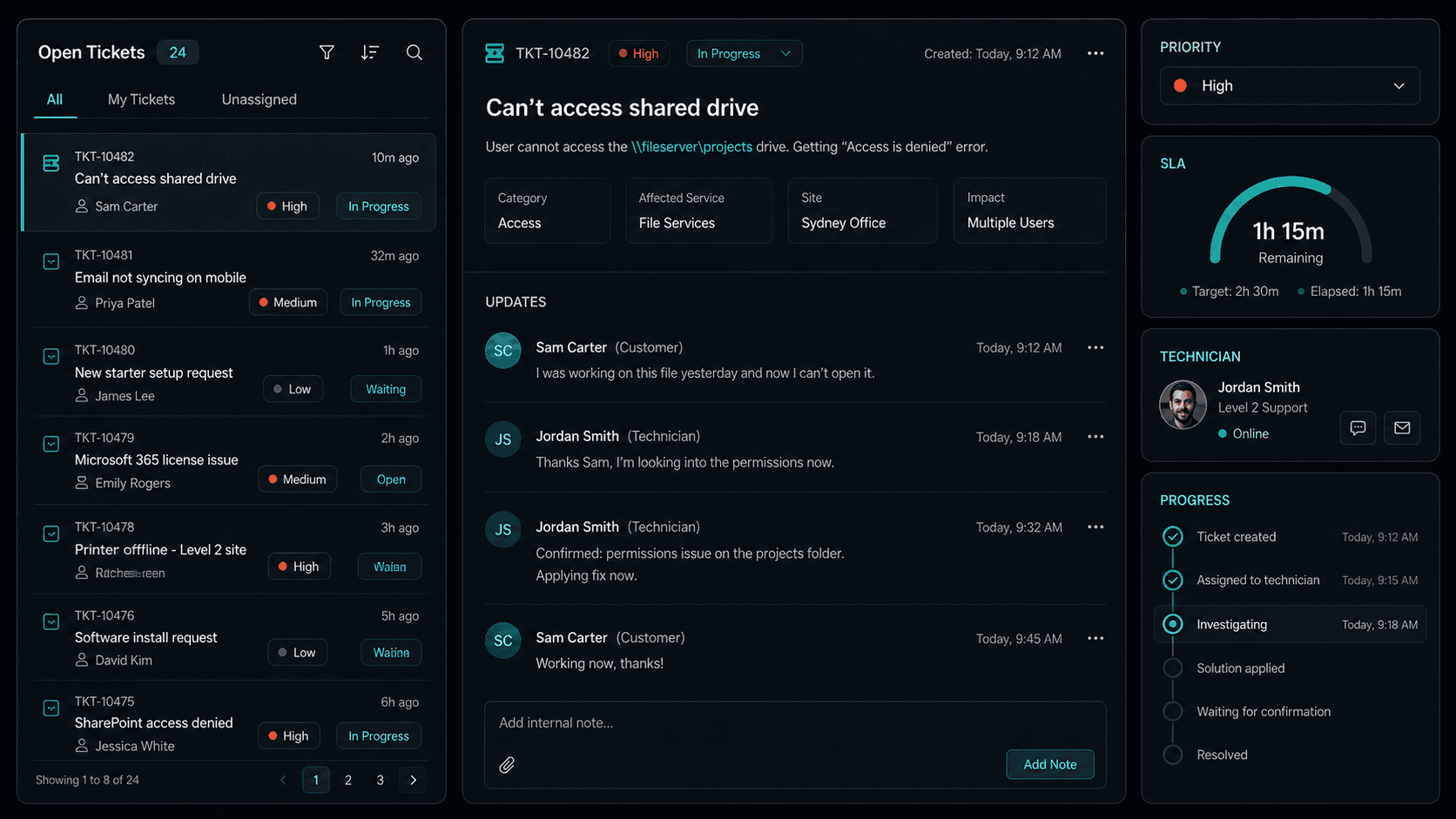
Everything your Pennant Hills business needs — managed as one seamless service with a fixed monthly price and guaranteed response times.
Last updated: 14 October 2026
Identify whose decisions the project depends on
A Pennant Hills business planning AI may have support from a sponsor while still lacking agreement from the people responsible for the work. Operations, information owners, customer teams and technical support can each hold a decision the project needs. OnIT Solutions provides structured opportunity assessment, AI roadmaps and staff enablement. Stakeholder alignment should identify those decision rights early, so the roadmap reflects the organisation's actual responsibilities rather than only the enthusiasm of the person who first proposed the tool.
Map who performs the task, who receives its result and who would deal with an error. Include people whose involvement is occasional but consequential, such as an exception approver or system owner. Ask what each person needs to decide before the project proceeds. Participation does not mean everyone approves every detail. A useful arrangement distinguishes people who must authorise a decision from those who provide evidence or need to be informed. This reduces the risk of discovering a missing approver after the implementation is nearly complete.
Expose different definitions of the problem
Ask each group to describe the current difficulty in its own terms. A sponsor may want faster handling while staff need clearer instructions and the customer team needs more accurate follow-up. Those aims can be compatible, but they are not interchangeable. Record the differences without immediately forcing them into a single broad objective. Use actual cases to establish where the process fails and which consequence matters. An agreed problem statement should preserve the important distinctions rather than simply use language vague enough that nobody objects.
Clarify assumptions about the proposed solution. Some people may expect a private drafting assistant while others imagine automatic customer responses. State what the initial scope includes and excludes, then ask participants to explain its likely effect on their work. Misalignment often concerns the imagined use rather than opposition to the actual task. Correcting that misunderstanding before development is more useful than treating a later concern as an unexpected change request. Keep unresolved expectations visible until the authorised decision-maker addresses them.

Agree priorities and non-negotiable constraints
Identify which outcomes the project will investigate and what conditions must be respected. Information handling, commercial authority and available review capacity can constrain the first use. Some priorities can be balanced; others require a decision before work can proceed. Make that distinction explicit. Do not allow a high expected benefit to silently override a boundary that its owner has not approved. The project team should understand which trade-offs it may recommend and which decisions remain with the business.
Use a short decision record for important agreements. State the issue, available evidence, chosen direction and responsible approver. If someone accepts a limitation, record the scope of that acceptance rather than treating it as permanent consent for later expansion. A workshop produces useful alignment only when its decisions can be found and applied afterwards. Otherwise participants may leave with different memories and the implementation team may select whichever interpretation makes the next technical step easiest.
Define how disagreements and changes will be resolved
Agree an escalation route for questions that cross functions. A source owner may approve information while an operational owner questions the proposed action. Neither decision necessarily resolves the other. Identify who brings those concerns together and how the project pauses while a consequential question remains open. A bounded experiment can continue on unrelated work, but it should not quietly proceed through an unresolved dependency. The process needs a practical way to say that a decision is pending without presenting delay as a personal failure.
Define how new evidence changes the agreement. Staff may discover an exception, a supplier may reveal an access constraint or early tests may expose extra review work. Give those findings a route into scope and readiness decisions. Avoid requiring the team to defend the original plan at all costs. Alignment means sharing a way to make decisions, not promising that nobody will revise a view. The roadmap should be able to adapt while preserving the reasons behind earlier choices.

Maintain alignment during handoff to implementation
Before implementation, confirm the task, owners, approved boundaries and evidence required for the next decision. Ask affected people to review the same concise account rather than separate summaries tailored so heavily that they imply different projects. Identify communication responsibilities and review points. Keep those with decision authority involved when their input is needed, while avoiding unnecessary meetings for people who only need an update. A workable stakeholder arrangement should support the project without becoming an additional source of indefinite waiting.
Bring the stakeholder map and competing expectations to OnIT's AI strategy service for your Pennant Hills business. Ask the planning work to make decision dependencies and unresolved issues explicit. Retain the agreed record when the project moves from assessment to implementation. The outcome is a shared basis for action: the business knows what it is testing, who can approve changes and how concerns will be resolved. That is more durable than a general declaration of support that leaves practical authority unclear.
Quick Facts
“For Pennant Hills businesses, ai strategy isn't just about keeping things running — it's about building a technology foundation that drives growth across Hills District.”
— OnIT Solutions, Hills District
What's included
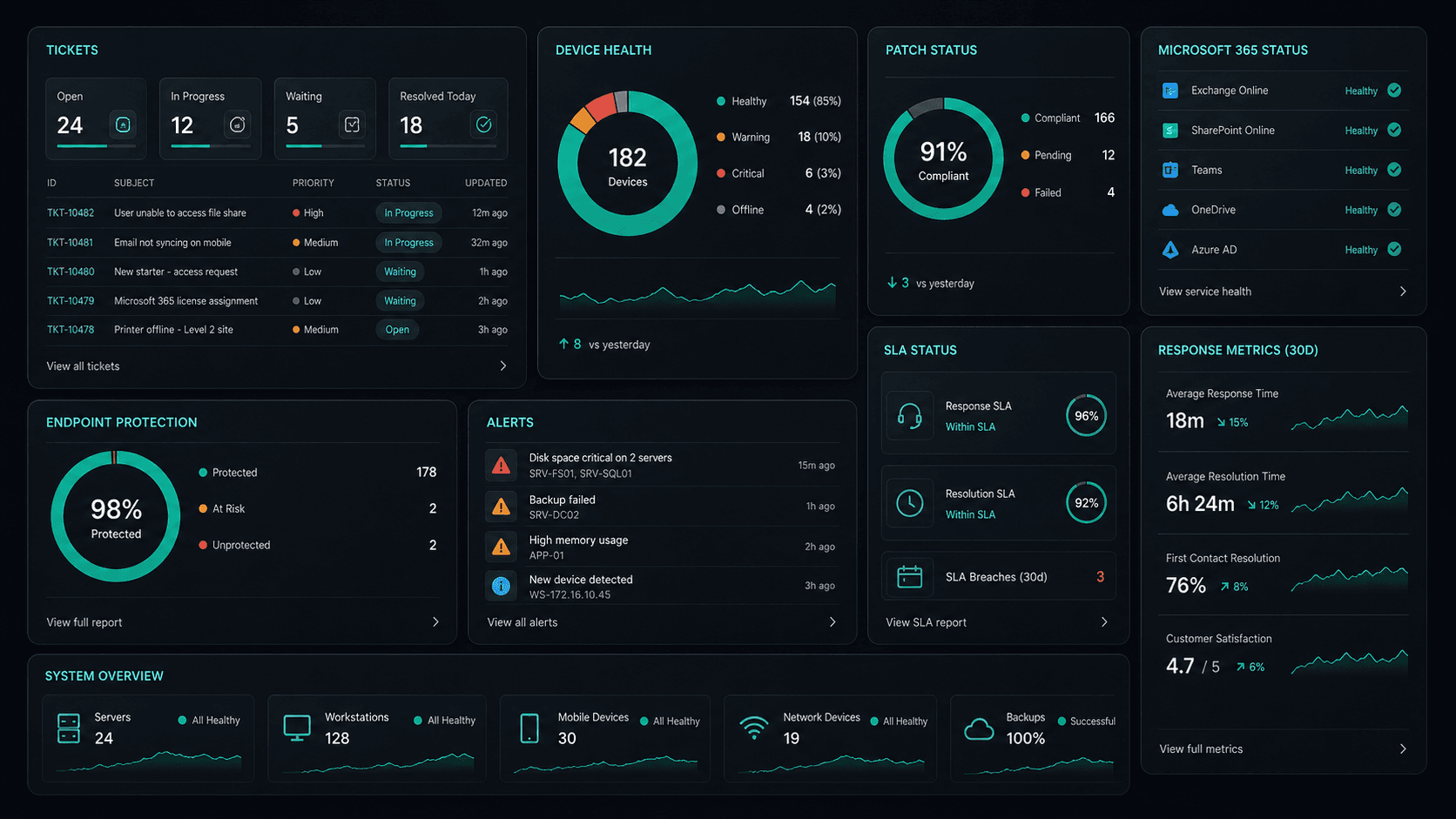
AI Strategy in Pennant Hills. One team.
AI Opportunity Audit
We map your processes, score automation potential, and identify where AI delivers the highest ROI.
ROI Modelling & Roadmap
3-year financial projections and a phased implementation roadmap — so you invest with confidence.
Pilot Deployment
We build and validate a working AI pilot before full rollout — proving value before you scale.
Training & Enablement
Staff training, change management, and ongoing support so your team adopts AI tools effectively.
Service detail
From audit to live automation
We map every process, score automation potential, and identify where AI delivers the highest measurable ROI.
Quantified business cases for every AI initiative — hours saved, cost reduced, and revenue impact projected.
A phased AI adoption plan aligned to your budget and business goals — quick wins first, then transformational projects.
We recommend what fits — OpenAI, Anthropic, local models, or hybrid. No vendor lock-in, no hidden incentives.
Proof-of-concept builds to validate ROI before full investment — real results, not slide decks.
Workshops and training programs that build internal AI capability — your team confident and productive with AI tools.
Structured rollout plans that bring staff along — adoption frameworks, communication templates, and feedback loops.
Quarterly reviews to assess impact, refine the roadmap, and keep pace with rapidly evolving AI capabilities.
Why OnIT
Everything in one AI strategy engagement
One team. One roadmap. AI opportunity audit, ROI modelling, pilot deployment, and staff enablement — all included.
AI opportunity scoring
We map every process, score automation potential, and identify where AI delivers the highest measurable ROI.
Vendor-agnostic recommendations
We recommend what fits — OpenAI, Anthropic, local models, or hybrid. No vendor lock-in, no hidden incentives.










Sydney-based workshops
On-site AI workshops with your team — discovery sessions, roadmap reviews, and hands-on enablement.
Measurable outcomes
Every engagement is tracked against KPIs with 3-year financial projections — proving ROI before you scale.
Service Breakdown
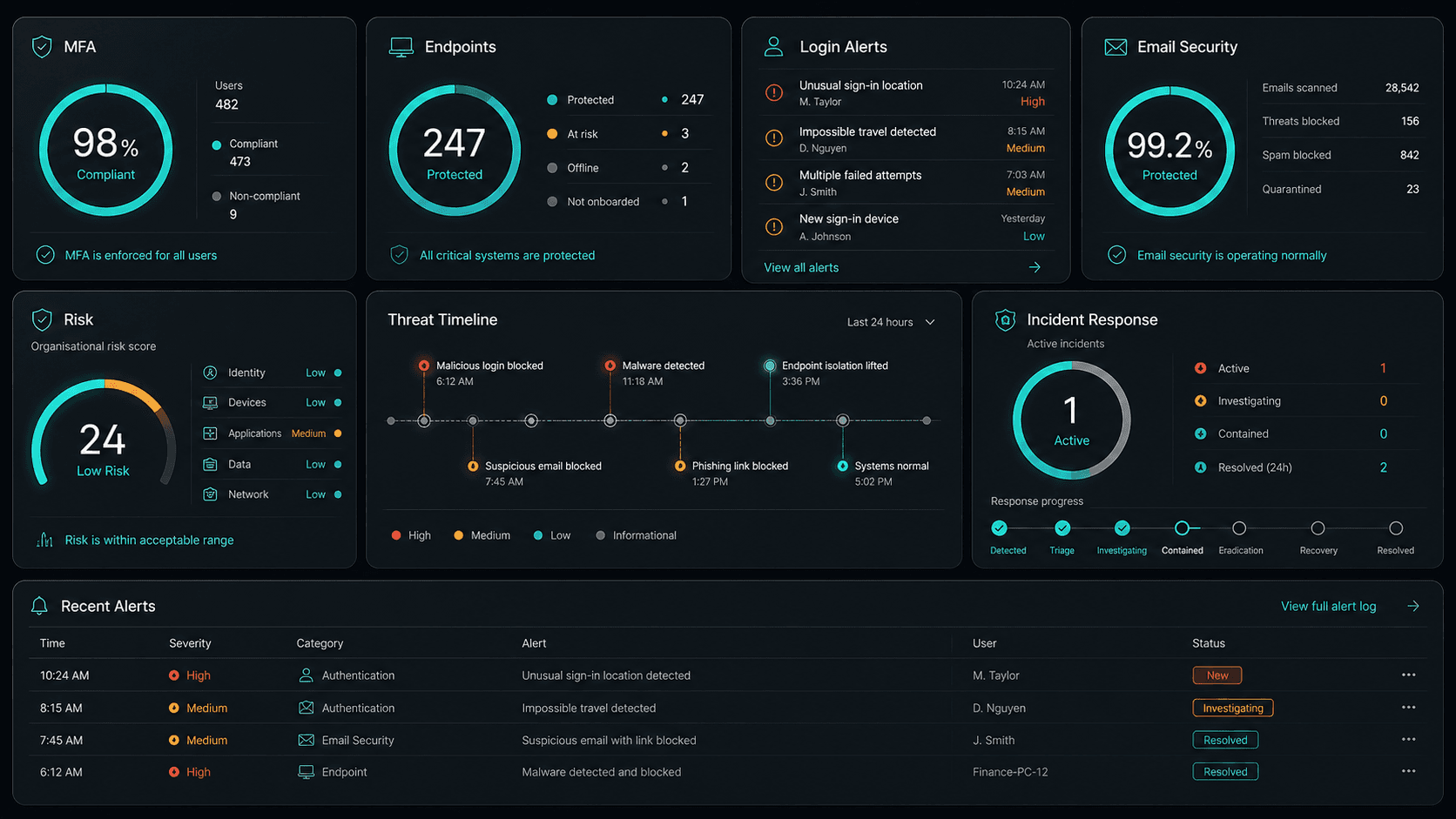
What's inside your plan
Click any card to see exactly what's included in each service area.

AI Strategy that scales from 5 to 200 seats, across every Hills District business.
Why OnIT Solutions
Your Pennant Hills business, without the overhead.
Serving Pennant Hills (2120) and the broader Hills District area — our Sydney-based engineers understand the Hills District business community and are reachable when you need them. Whether you're a 5-person team or a growing operation with 200 seats, we scale ai strategy to fit.
By the numbers
Measurable outcomes, guaranteed in writing
No surprise invoices. No waiting on hold. No different technician every time you call.
At a Glance
Included in your plan
Got questions?
Frequently asked questions
Also serving nearby
AI Strategy across Hills District
Explore further
Related services for Pennant Hills
Cybersecurity
Threat monitoring, Essential Eight compliance, and endpoint detection — keeping your business secure around the clock.
IT Support Sydney
On-demand helpdesk and on-site support for your team. Fast response, local engineers, no lock-in contracts.
AI Automation
Workflow automation, AI chatbots and voice agents that reduce admin and free your team to focus on growth.

Get started
Ready for better AI Strategy
in Pennant Hills?
Book a free ai strategy assessment with one of our Sydney-based engineers serving Pennant Hills and Hills District. No lock-in, no obligation.
No lock-in contracts · Sydney-based engineers · Same-day response