AI Strategy · Paddington
AI Strategy Paddington: Plan for Variable Workloads
A workflow tested during a quiet period may face different conditions when demand or staffing changes. Assess workload variation and the operating decisions needed before relying on AI during a busy period.
No lock-in · Sydney-based engineers · Response <4h

<4h
Response SLA
Priority response in Paddington
99.9%
Uptime Target
SLA-backed availability
0
Lock-In Contracts
Cancel anytime, no penalties
100%
Australian Team
Local engineers, no offshore
Technology partners and platforms we work with







What we deliver
AI Strategy that works while you do.
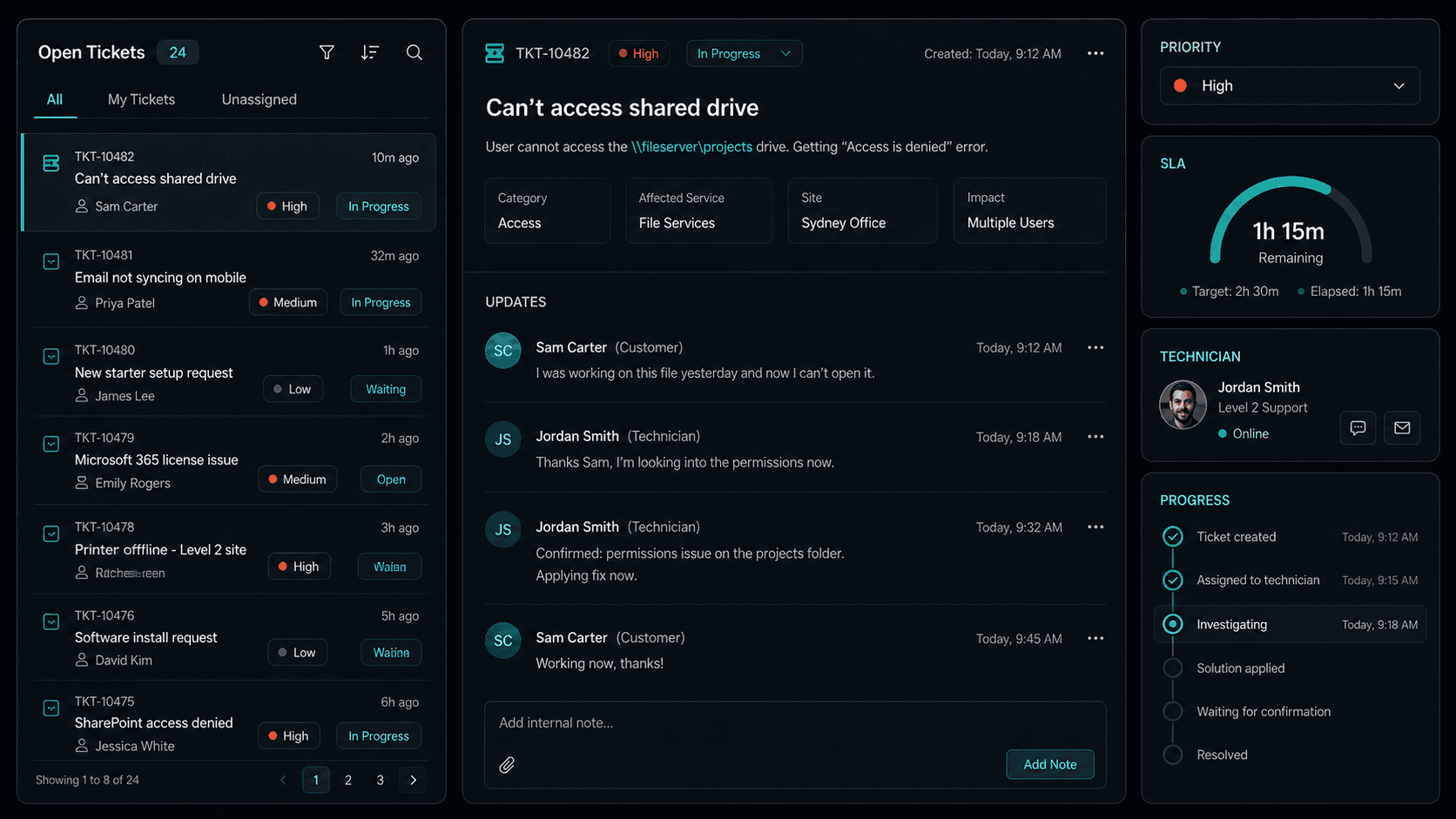
Everything your Paddington business needs — managed as one seamless service with a fixed monthly price and guaranteed response times.
Last updated: 14 October 2026
Describe variation using the business's own evidence
A Paddington business planning AI should understand how its workload changes rather than assume one test period represents the year. Demand may vary with business events, campaigns or staffing patterns, but the assessment should use the organisation's evidence. OnIT Solutions provides AI opportunity scoring, roadmap planning and financial modelling. Workload planning identifies the conditions under which a proposed task will operate, so readiness is not based only on a convenient demonstration with a few prepared cases and immediately available reviewers.
Record what is known about volume, timing and case type. Separate observations from estimates and identify missing information. A busy period can change the mix of requests as well as their count. Staff may encounter more incomplete inputs or unfamiliar customers while having less time to investigate. Avoid inventing a seasonal pattern because it sounds plausible for the industry or location. The useful question is how this business's real variation affects the task being considered.
Assess the complete process under higher demand
Map preparation, generation, review, exception handling and downstream action. A tool may produce outputs quickly while the receiving team remains constrained. Identify the step that determines how much work can be completed, not merely how much can be generated. Include the effort of investigating unclear cases and maintaining the source information during busy periods. A forecast that counts only the routine automated step can overstate the capacity available to serve customers.
Consider reduced staffing as well as increased demand. A workflow may depend on one approver or source owner whose absence changes the operating arrangement. Define the substitute or temporary route and verify that person has the authority and evidence needed. Do not assume AI removes the dependency simply because it prepares a recommendation. The business should know which responsibilities remain with staff and how their availability affects the approved use when ordinary conditions change.

Check system and supplier assumptions explicitly
Identify relevant service constraints in the proposed arrangement and ask the responsible provider how they affect the task. Avoid assuming unlimited capacity or importing claims from another service plan. Record what has been tested and what remains an assumption. The planning exercise does not need speculative technical limits; it needs an accurate account of the actual dependencies and the evidence required before the business relies on them during a demanding period.
Consider what happens if a connected system slows down or becomes unavailable. The workflow needs a visible pending state and an appropriate response, especially if actions may have partly completed. Staff should not repeat uncertain operations blindly to clear a queue. Assign ownership for investigation and define how affected work is prioritised. A peak-demand plan should account for degraded operation, rather than assume every component will remain available precisely when the business has the least spare capacity to intervene.
Set practical workload boundaries and fallback decisions
Decide which cases remain within the AI-assisted scope when demand rises. A business may prioritise a defined task category or temporarily use another route for unusual requests. Keep those decisions authorised and communicate them to staff. Do not silently weaken required review because the queue is long. If a check is necessary, the response to insufficient capacity should be a considered operating decision about scope, allocation or timing, not an informal expectation that employees approve faster.
Define triggers for pausing new work, adding authorised support or switching to the temporary process. Use observable conditions that staff can recognise and a responsible person who can decide. Represent any customer commitments accurately. A fallback should preserve case context and make unfinished work visible so it can be completed later. Test how the business returns to normal operation, including reconciliation of work handled through an alternative channel. Otherwise the busy period can leave duplicated or unowned cases behind.
Define how the owner distinguishes a temporary surge from a sustained change in demand. A short-lived queue may need prioritisation, while persistent growth can require a new scope or resourcing decision. Keep the observation period and reasoning with the decision so staff understand why a temporary workaround is ending or becoming a reviewed operating arrangement.

Use a proportionate rehearsal and review the assumptions
Exercise representative higher-demand and absence scenarios within an approved test arrangement. The purpose is to expose ownership, queue and dependency questions, not to claim that a rehearsal predicts every future peak. Record observations and update the roadmap where preparation is needed. After an actual busy period, compare the experience with the assumptions and identify recurring problems. Keep routine and exceptional conditions in the evidence so a single successful event does not become a universal capacity claim.
Bring workload records, staffing constraints and critical operating periods to OnIT's AI strategy service for your Paddington business. Ask the assessment to connect demand variation to review capacity, dependencies and a manageable scope. The useful outcome is a plan for changing conditions with clear decisions and temporary routes. It does not promise that AI creates unlimited capacity or that routine test results guarantee dependable service during every workload peak.
Quick Facts
“For Paddington businesses, ai strategy isn't just about keeping things running — it's about building a technology foundation that drives growth across Eastern Suburbs.”
— OnIT Solutions, Eastern Suburbs
What's included
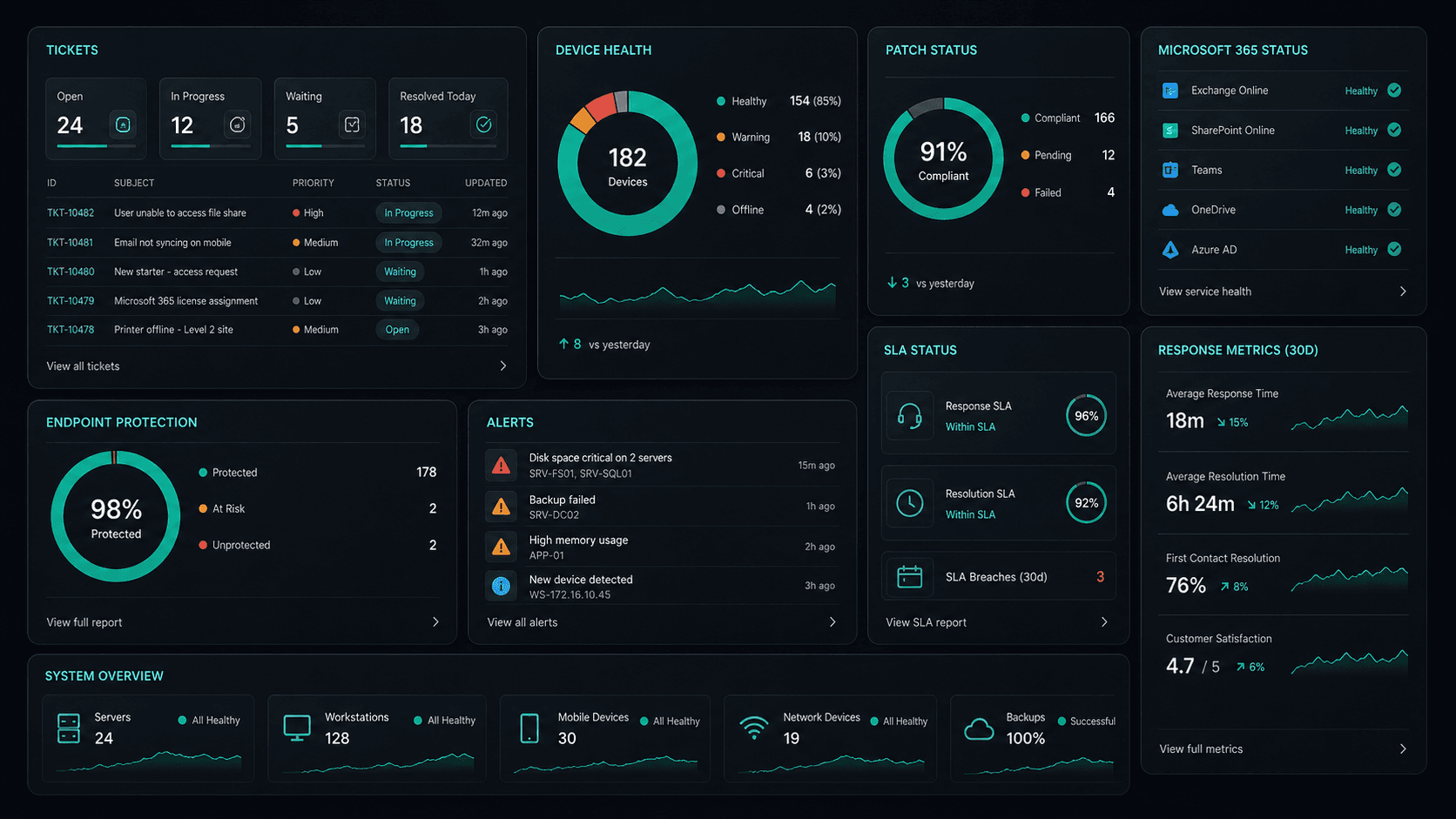
AI Strategy in Paddington. One team.
AI Opportunity Audit
We map your processes, score automation potential, and identify where AI delivers the highest ROI.
ROI Modelling & Roadmap
3-year financial projections and a phased implementation roadmap — so you invest with confidence.
Pilot Deployment
We build and validate a working AI pilot before full rollout — proving value before you scale.
Training & Enablement
Staff training, change management, and ongoing support so your team adopts AI tools effectively.
Service detail
From audit to live automation
We map every process, score automation potential, and identify where AI delivers the highest measurable ROI.
Quantified business cases for every AI initiative — hours saved, cost reduced, and revenue impact projected.
A phased AI adoption plan aligned to your budget and business goals — quick wins first, then transformational projects.
We recommend what fits — OpenAI, Anthropic, local models, or hybrid. No vendor lock-in, no hidden incentives.
Proof-of-concept builds to validate ROI before full investment — real results, not slide decks.
Workshops and training programs that build internal AI capability — your team confident and productive with AI tools.
Structured rollout plans that bring staff along — adoption frameworks, communication templates, and feedback loops.
Quarterly reviews to assess impact, refine the roadmap, and keep pace with rapidly evolving AI capabilities.
Why OnIT
Everything in one AI strategy engagement
One team. One roadmap. AI opportunity audit, ROI modelling, pilot deployment, and staff enablement — all included.
AI opportunity scoring
We map every process, score automation potential, and identify where AI delivers the highest measurable ROI.
Vendor-agnostic recommendations
We recommend what fits — OpenAI, Anthropic, local models, or hybrid. No vendor lock-in, no hidden incentives.










Sydney-based workshops
On-site AI workshops with your team — discovery sessions, roadmap reviews, and hands-on enablement.
Measurable outcomes
Every engagement is tracked against KPIs with 3-year financial projections — proving ROI before you scale.
Service Breakdown
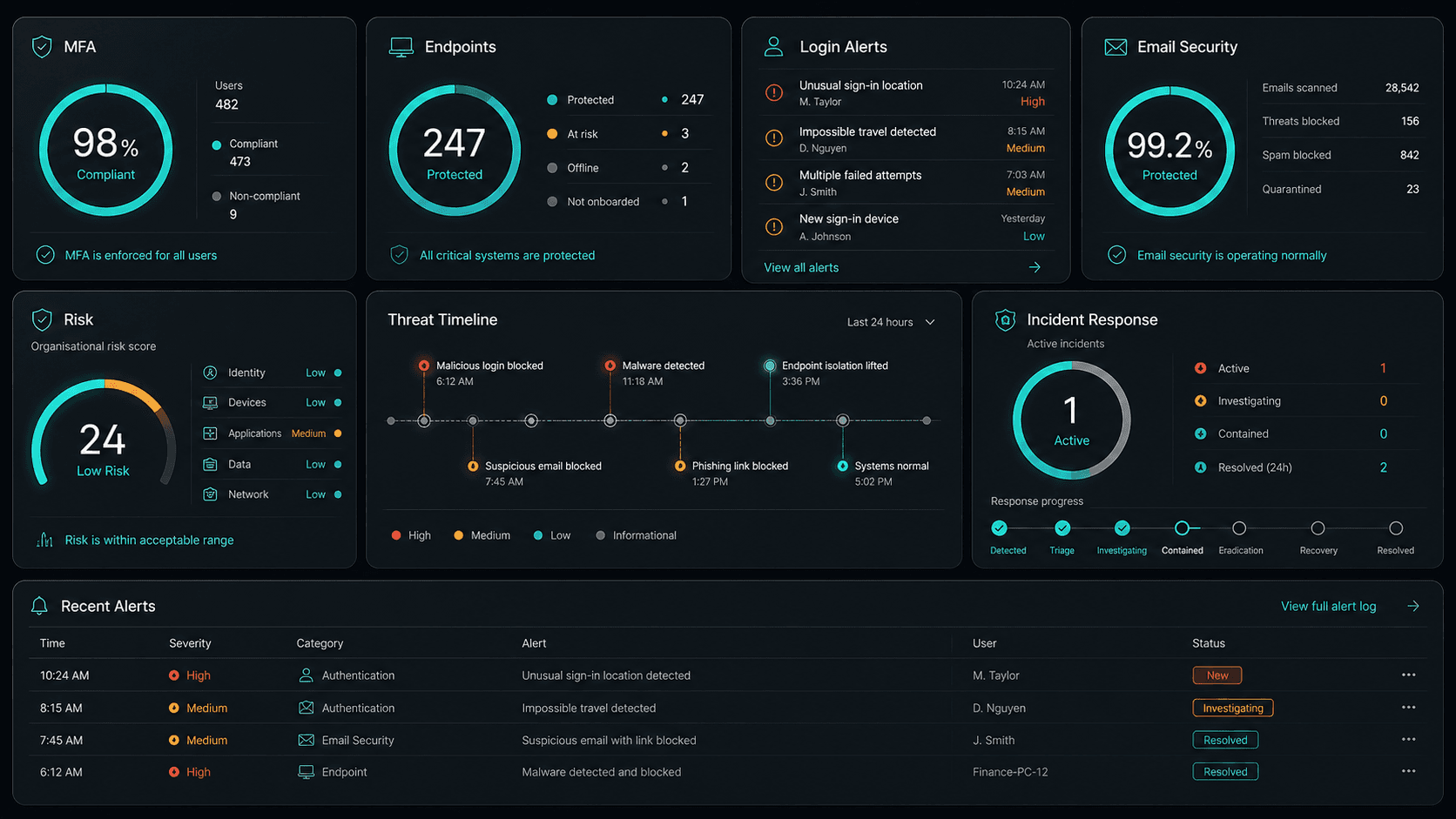
What's inside your plan
Click any card to see exactly what's included in each service area.

AI Strategy that scales from 5 to 200 seats, across every Eastern Suburbs business.
Why OnIT Solutions
Your Paddington business, without the overhead.
Serving Paddington (2021) and the broader Eastern Suburbs area — our Sydney-based engineers understand the Eastern Suburbs business community and are reachable when you need them. Whether you're a 5-person team or a growing operation with 200 seats, we scale ai strategy to fit.
By the numbers
Measurable outcomes, guaranteed in writing
No surprise invoices. No waiting on hold. No different technician every time you call.
At a Glance
Included in your plan
Got questions?
Frequently asked questions
Also serving nearby
AI Strategy across Eastern Suburbs
Explore further
Related services for Paddington
Cybersecurity
Threat monitoring, Essential Eight compliance, and endpoint detection — keeping your business secure around the clock.
IT Support Sydney
On-demand helpdesk and on-site support for your team. Fast response, local engineers, no lock-in contracts.
AI Automation
Workflow automation, AI chatbots and voice agents that reduce admin and free your team to focus on growth.

Get started
Ready for better AI Strategy
in Paddington?
Book a free ai strategy assessment with one of our Sydney-based engineers serving Paddington and Eastern Suburbs. No lock-in, no obligation.
No lock-in contracts · Sydney-based engineers · Same-day response