Understanding the Threat of SIM-Swapping Attacks in Australia
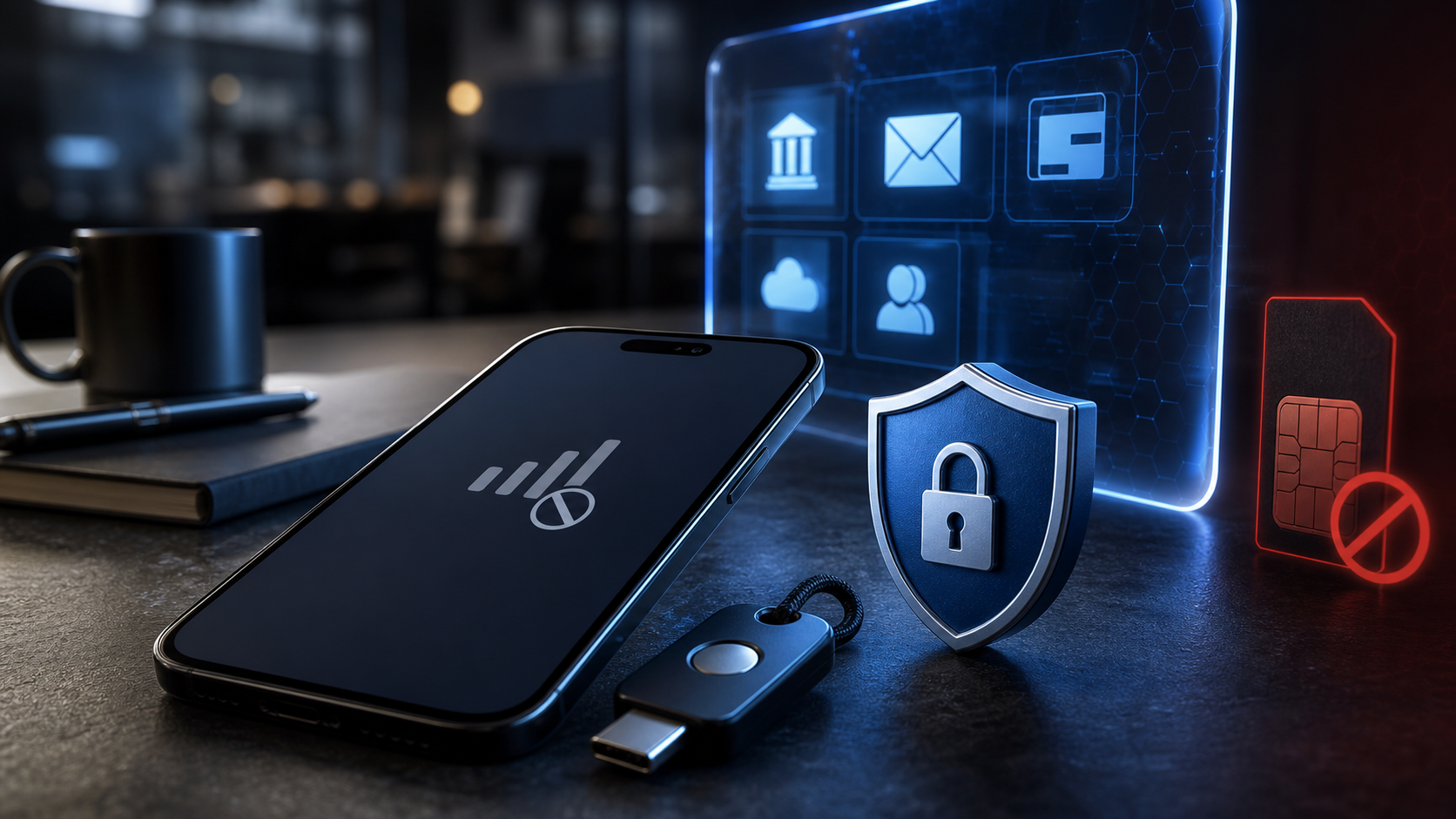
Imagine checking your phone during a busy workday only to find it has completely lost signal, showing "No Service" or "SOS only" without warning. This often signals that your mobile number has been hijacked by a criminal through SIM-swapping attacks, a sophisticated form of identity theft that is rapidly increasing across the country. By the time you realise there is a serious technical issue, the attacker may have already used your phone number to reset passwords and gain entry into your most sensitive business accounts.
Local cyber experts, including Sash Vasilevski, have recently highlighted that the frequency and cost of these breaches are reaching record highs in Australia. For small-to-medium businesses, the risk is particularly high because mobile numbers are frequently tied to multi-factor authentication (MFA) codes for banking, email, and cloud platforms. Once a criminal controls your SIM, they effectively hold the "keys to the kingdom," allowing them to bypass traditional security measures with ease.
Addressing Mobile Account Security Under the Cyber Security Act
The Australian Government is taking this threat seriously, with the updated Cyber Security Act now mandating stricter reporting and minimum security standards for organisations. This legislation puts significant pressure on local businesses to move away from legacy technology and implement robust cyber security Australia practices. It is no longer enough to rely on a simple password; businesses must now prove they are taking proactive steps to protect their digital identities from being ported away by malicious actors.
While many business owners assume they are "too small" to be targeted, criminals often view SMBs as the path of least resistance due to more relaxed mobile account security protocols. Enhancing your defence strategy often requires a shift toward more secure authentication methods, such as hardware security keys or authenticator apps, which do not rely on the cellular network. Building this resilience ensures that even if an employee’s personal details are leaked in a data breach, the business as a whole remains shielded from a total account takeover.
Adopting these standards is becoming a core component of modern managed IT services, helping businesses stay compliant with ACSC guidelines. To protect your operations, you must first identify where your mobile number serves as the single point of failure in your security chain.
How Attackers Exploit Gaps in Mobile Account Security
Most people assume cyber criminals spend their days writing complex code, but the reality of modern identity theft is often much simpler: it starts with a persuasive phone call. Unlike traditional data breaches that involve cracking encrypted servers, many SIM-swapping attacks rely on social engineering to manipulate the human element within a mobile carrier’s customer service team. An attacker doesn't need to be a coding genius to convince a distracted retail employee that they have lost their phone and need their number moved to a new SIM card immediately.
These gaps in mobile account security exist because mobile providers are often caught between two conflicting goals: offering a seamless customer experience and maintaining airtight security. While carriers do have safeguards like port-validation tickets and account-level PINs, these protocols are only effective if they are strictly enforced. Attackers often use leaked personal information from previous data breaches to answer "security questions," making them appear as the legitimate business owner or an authorised employee to the support staff.
The Role of Social Engineering in Mobile Exploits
Social engineering is the practice of manipulating people into divulging confidential information, and it is the primary engine behind successful number porting. In a typical scenario, an attacker will call a telco provider multiple times until they find a staff member who is willing to bypass a security step "just this once" for a "distressed" customer. By creating a sense of urgency—such as claiming they are stranded without a working phone—the attacker exploits the natural human desire to be helpful, effectively bypassing the technical barriers of the network.
For an Australian business, this means your multi-factor authentication (MFA) is only as strong as the person answering the phone at your mobile carrier. If the attacker successfully convinces the employee to transfer the number, every SMS-based security code for your bank, email, and cloud solutions will be delivered directly to the criminal's device. This allows them to reset passwords and lock you out of your own systems in minutes, often before you even realize your phone has lost service.
Why Small Businesses Are Prime Targets for SIM-Swapping Attacks
A common mistake among Australian small-to-medium businesses is the belief that they are too small to be worth the effort of a sophisticated attack. In reality, cyber criminals often view SMBs as "low-hanging fruit" because they typically have fewer internal controls than enterprise-level corporations. When your business is targeted, the goal is rarely just to steal a phone number; it is to gain access to the financial accounts and sensitive client data that the phone number protects.
Strengthening your overall cyber security Australia posture requires acknowledging that every employee's mobile device is a potential gateway into your corporate network. By understanding that anyone with a mobile phone can be a target, business leaders can begin to implement more resilient defences, such as moving away from SMS-based codes and adopting hardware security keys. This shift is essential for protecting critical communications and ensuring your credentials remain in the right hands.
Recognising how these human and procedural vulnerabilities are exploited is the first step toward closing the door on attackers before they can disrupt your operations.
Replacing SMS with Stronger Multi-Factor Authentication
Relying on your mobile phone to receive a six-digit code via text message might feel secure, but for many businesses, this is actually the weakest link in their digital perimeter. When criminals successfully execute SIM-swapping attacks, they aren't just stealing your phone number; they are hijacking your identity. Because so many Australian business accounts use SMS as the secondary layer of multi-factor authentication, the moment your SIM is swapped, the attacker receives every login code directly on their own device. This effectively bypasses your password and grants them immediate access to your banking, emails, and sensitive client data.
Moving Beyond SMS for Cyber Security in Australia
The Australian Cyber Security Centre (ACSC) has noted that while SMS is better than no protection at all, it is no longer considered a "best practice" for modern cyber security Australia. To truly harden your mobile account security, you must transition your team toward methods that do not rely on the cellular network to deliver secrets. Authenticator apps are the first logical step, as they generate codes locally on the physical device hardware, meaning the codes stay on the phone even if the phone number is moved to a different SIM card.
- Audit your critical business accounts (Email, Banking, CRM) to see which currently rely on SMS.
- Install a reputable authenticator app, such as Microsoft Authenticator or Google Authenticator, on all employee devices.
- Update your account security settings to "App-based MFA" and scan the provided QR code to link the device.
- Once the app is verified and working, disable the SMS/Text message option entirely to close the loophole.
The Power of Hardware Security Keys
For business owners or staff with access to high-value financial accounts, hardware security keys represent the ultimate gold standard of protection. These small, USB-style devices require a physical touch or NFC tap to complete a login, making them virtually immune to remote SIM-swapping attacks. Even if a criminal has your password and has hijacked your phone number, they cannot get past the login screen without physically holding that specific piece of hardware in their hand.
- Unmatched Protection: Hardware keys use encrypted signatures that cannot be intercepted by hackers or phished through fake websites.
- Ease of Use: Many keys work via a simple tap against the back of a smartphone or by plugging into a laptop’s USB port.
- Compliance: Using physical keys helps your business meet the strictest standards of managed IT security and insurance requirements.
By migrating your staff away from text-message codes and toward these more resilient methods, you significantly reduce the "blast radius" of a mobile-related breach. Ensuring your team is equipped with the right tools is only half the battle; the next step involves locking down the carrier accounts themselves to prevent the swap from happening in the first place.
Hardening Your Carrier Accounts for Cyber Security in Australia
Securing your business mobile fleet requires more than just a strong screen-lock password; it demands a direct conversation with your service provider to lock down the underlying account infrastructure. Because SIM-swapping attacks bypass your device's internal security entirely, your primary line of defence is the verification process used by carriers like Telstra, Optus, or Vodafone. By hardening these accounts at the source, you create a robust buffer that prevents a fraudster from easily convincing a customer service representative to port your number to a new device.
Implementing Port-Validation and Account PINs
Most Australian carriers offer specific "port-validation tickets" or "porting locks" that add a mandatory verification step before a mobile number can be transferred to a new provider or a new SIM card. You should contact your provider's business support team to ensure these protections are active on every service your company pays for. Establishing a unique, account-level PIN that is completely separate from your personal codes ensures that only authorised personnel can make administrative changes to your mobile account security settings.
Moving Away from Personal Numbers for Business Assets
A common vulnerability in many Australian SMBs is the use of an individual employee's personal mobile number as the primary recovery method for critical business systems like email or banking. This reliance on legacy technology creates a single point of failure; if that specific employee is targeted, your entire business infrastructure could be compromised. Transitioning to dedicated business-owned services managed through a central cyber security Australia framework allows for much better oversight and control.
Whenever possible, you should move your team away from multi-factor authentication (MFA) methods that rely on SMS. Implementing hardware security keys or authenticator apps ensures that even if a carrier account is breached, your core business data remains inaccessible to the attacker. Shifting toward these hardware-based solutions is a hallmark of professional managed IT support, prioritising long-term resilience over temporary convenience.
Proactive Logging and Monitoring for Anomalies
Early detection is often the only thing standing between a minor technical glitch and a catastrophic data breach. Your administrative team should regularly review account logs and set up automated notifications for any "out-of-band" changes, such as requests for new SIM cards, address updates, or changes to authorised contacts. In Australia, if you or an employee receives a "porting notification" SMS that was not requested, you generally have a very short window—sometimes only minutes—to contact your provider and halt the transfer before the number goes active on a criminal's device.
Maintaining an up-to-date inventory of which mobile numbers are linked to which cloud services allows your IT team to respond instantly if a service unexpectedly loses signal. Taking these preventative steps ensures that your business stays ahead of evolving threats while maintaining operational continuity in an increasingly hostile digital landscape.
Building a Resilient Defence with Incident Response Readiness
Assuming your digital perimeter is impenetrable is a gamble that most Australian small businesses simply cannot afford to lose in today’s landscape. When a breach occurs, the difference between a minor hiccup and a total business collapse often comes down to how quickly you can detect the intrusion and initiate a pre-planned response. By implementing a framework of incident response readiness, you shift the power back to your business, ensuring that SIM-swapping attacks do not result in permanent data loss or prolonged operational downtime.
Leveraging AI for Continuous Security Validation
Modern AI-powered threat detection acts as a 24/7 digital watchman, identifying anomalous activity that human eyes might easily miss. These systems use machine learning to understand the "normal" behaviour of your staff and networks, flagging immediate alerts if a login suddenly occurs from an unrecognised device or location. For many SMBs, integrating an AI strategy into their security stack provides the autonomous monitoring needed to catch a hijacked account before the attacker can exfiltrate sensitive files.
Furthermore, continuous security validation allows your IT team to simulate attacker behaviour across your cloud and hybrid environments. This proactive approach helps uncover hidden risks in your mobile account security, such as legacy apps that might still allow password resets via a hijacked phone number. Regularly testing your defences in this way ensures that your cyber security Australia standards are not just theoretical but are actively protecting your assets in real-time.
Defining Recovery Objectives and Securing Backups
To build true resilience, your business must clearly define its Recovery Time Objective (RTO) and Recovery Point Objective (RPO). RTO refers to how quickly you need your systems back online after a disruption, while RPO determines how much data your business can afford to lose (for example, losing four hours of work versus four days). Establishing these benchmarks allows your managed IT provider to tailor a backup solution that meets your specific operational needs and ensures business continuity.
Crucially, these backups must remain secure and off-site, completely isolated from any accounts that rely on mobile-linked multi-factor authentication for access. If a criminal successfully executes a SIM swap, they will often attempt to delete your backups to force a ransom payment. By maintaining immutable, air-gapped backups that require physical hardware security keys for administrative changes, you ensure that your "last line of defence" remains untouched regardless of what happens to your mobile network connection.
Documenting these recovery procedures ensures that every staff member knows exactly who to call and what steps to take the moment a mobile device loses service unexpectedly. This level of preparation transforms a potentially devastating event into a manageable technical issue that can be resolved without compromising the future of the company.
Protecting Your Reputation and Future-Proofing the Business
When an identity thief takes control of a company director’s mobile number, the damage quickly ripples beyond just an empty bank account or a locked email inbox. Your clients trust you to keep their sensitive data safe, and a single instance of SIM-swapping attacks hitting your leadership team can shatter that hard-earned brand reputation in hours. In the current digital landscape, operational resilience is no longer just a technical checkbox; it is the foundation of your business's longevity and client confidence.
Navigating New Australian Reporting Mandates
The regulatory environment for cyber security Australia is shifting rapidly with the introduction of the Cyber Security Act, which now mandates ransomware reporting for many organisations. Beyond just reporting incidents after they occur, Australian businesses are now expected to maintain best-practice security logging to help investigators and insurers trace how a breach occurred. Ensuring your mobile account security is backed by detailed logs means that if an unauthorised porting request occurs, you have the evidence needed to respond quickly and comply with federal requirements.
Shifting to Proactive Resilience with Stronger Authentication
Many SMBs fall into the trap of a reactive mindset, thinking they will simply "deal with it if it happens," but the cost of recovery is almost always higher than the cost of prevention. Shifting to a proactive, resilience-first strategy involves auditing your current multi-factor authentication methods and identifying legacy technology that still relies on vulnerable SMS codes. By integrating modern cloud solutions that support hardware security keys, you remove the mobile network as a single point of failure entirely, making your business a much harder target for criminals.
Documenting your Recovery Time Objectives (RTO) and Recovery Point Objectives (RPO) is essential for maintaining business continuity in the face of modern threats. These metrics define how quickly you need to be back online and how much data you can afford to lose after an incident. A well-tested recovery plan ensures that even if an identity gap is exploited, your team has a clear, step-by-step roadmap to restore services without losing the trust of your Australian customer base or your standing in the industry.
Establishing these protocols today provides the peace of mind that your business can withstand the evolving tactics of cyber criminals while remaining fully compliant with local laws.
Frequently Asked Questions
What is a SIM-swapping attack?
A SIM-swapping attack occurs when a criminal convinces your mobile carrier to link your phone number to a SIM card they control. Once they have your number, they can bypass SMS-based security to access your bank accounts, emails, and sensitive business data.
Why is SMS MFA considered unsafe for Australian businesses?
SMS multi-factor authentication is vulnerable because it relies on the mobile network to deliver codes. If an attacker successfully swaps your SIM, they receive all your security codes directly on their device, effectively rendering your passwords useless.
How can I protect my business mobile accounts from being ported?
You should contact your mobile provider to set up a unique account PIN and request a 'porting lock' or additional identity verification requirements. Additionally, move all business accounts away from SMS-based MFA and use hardware security keys or authenticator apps instead.
What should I do if I suspect my SIM has been swapped?
If your phone suddenly loses all signal and says 'SOS only' or 'No Service' unexpectedly, contact your mobile carrier immediately from a different phone to check for unauthorised porting. You should also notify your bank and IT provider to lock down business accounts before the attacker can use your number to reset passwords.
Sources
- https://www.linkedin.com/posts/sashv_quantity-and-cost-of-breaches-continues-to-activity-7386559534367965184-jfTR
- https://www.proofpoint.com/us/threat-reference/sim-swapping
- https://au.norton.com/blog/id-theft/what-is-sim-swapping
- https://www.thomsonreuters.com/en-us/posts/corporates/sim-swap-fraud/
- https://www.telstra.com.au/business-enterprise/news-research/articles/stopping-sim-swap-fraud-before-it-starts
- https://www.acma.gov.au/combating-phone-scams
Need Expert IT Help?
Still stuck, or want this handled professionally? Our technicians provide fast remote and on-site IT support across Australia. Whether it's a one-off issue or ongoing support for your whole team, we've got you covered. Get in touch with OnIT Solutions today.