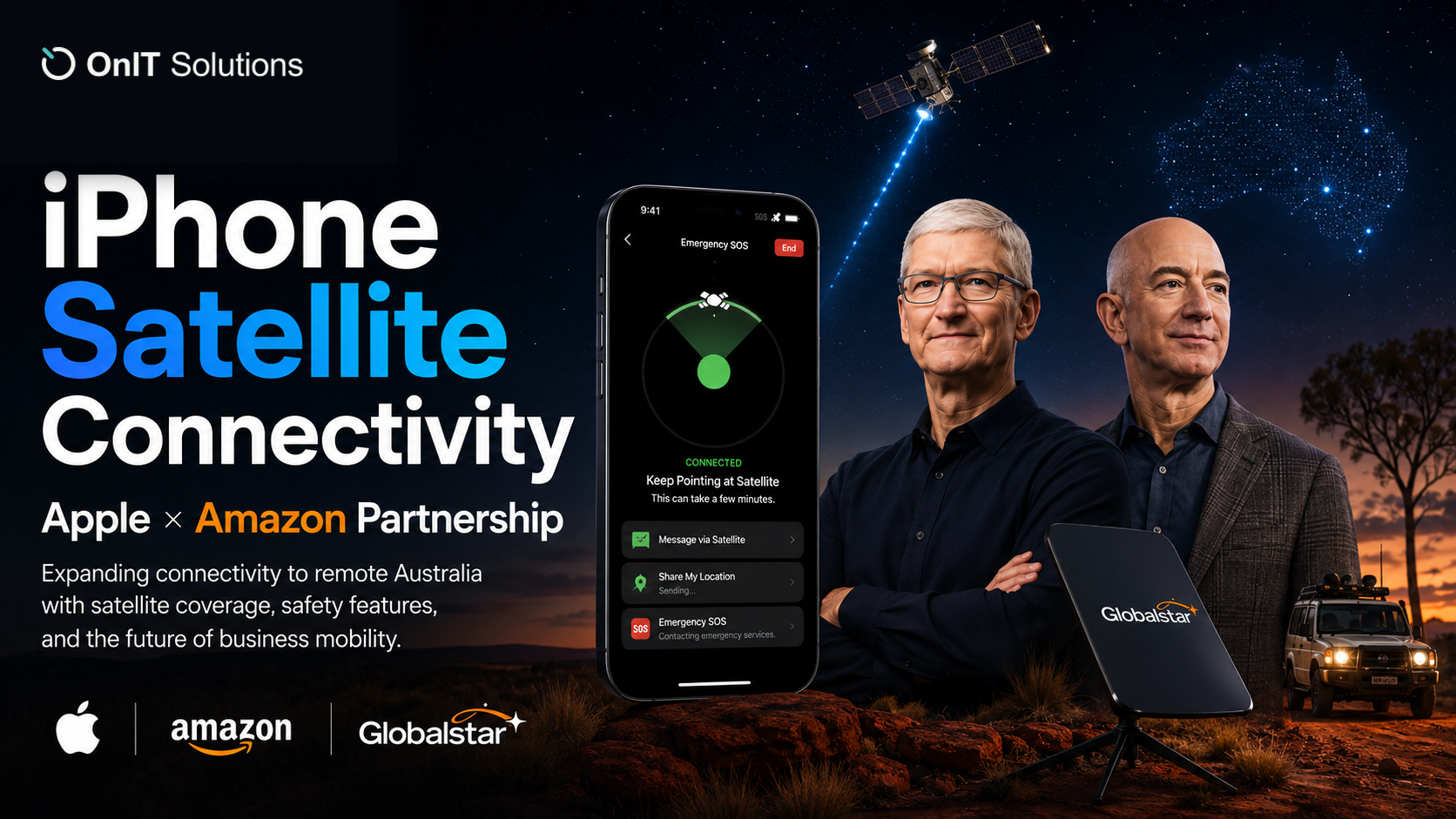
Amazon’s $11.6B Globalstar Acquisition Secures iPhone Satellite Connectivity
Amazon has confirmed an $11.6 billion merger agreement with satellite operator Globalstar, a move that fundamentally reshapes the satellite communications landscape for mobile devices. This high-stakes acquisition is accompanied by a new agreement with Apple, ensuring that iPhone satellite connectivity remains a core feature for current and future hardware models. By securing this partnership, Amazon positions itself as a direct competitor to SpaceX’s Starlink, leveraging Globalstar’s existing assets to bolster its emerging Amazon Leo network.
Reliability for Emergency SOS via Satellite
The deal specifically focuses on maintaining and expanding the safety features that have defined recent Apple hardware launches. Users will continue to have access to Emergency SOS via satellite, allowing them to contact emergency services even when traditional cellular towers are completely out of reach. Additionally, the partnership secures the future of roadside assistance and location sharing through the Find My network, providing a vital safety net for users in isolated environments.
This agreement is not limited to existing hardware but is designed to support future iPhone and Apple Watch models, including the Apple Watch Ultra 3. For businesses that rely on the latest mobile technology to keep their teams connected, this long-term commitment provides much-needed certainty. As organisations integrate mobile devices into their broader cloud solutions, the ability to maintain a connection regardless of terrestrial coverage becomes a significant operational advantage.
Supporting Remote Australian Operations
For Australian businesses operating in remote regions, this merger provides a crucial layer of security for field staff working outside traditional 4G or 5G coverage areas. Whether a team is conducting environmental surveys in the outback or managing remote agricultural infrastructure, reliable communication through the Apple ecosystem is no longer a luxury. This partnership promises more reliable communication options for staff who previously had to rely on expensive and bulky satellite phones for basic safety.
The strategic shift toward the Amazon Leo network also places pressure on the Starlink mobile service, which has dominated the low Earth orbit (LEO) market to date. While SpaceX currently maintains a lead in satellite count, the Apple-Amazon alliance creates a powerful ecosystem that bridges consumer hardware and satellite infrastructure. This competition is likely to drive further innovation, ensuring that satellite messaging and data features become more accessible for professionals in every sector.
The decision to partner with Amazon marks a significant strategic pivot for Apple, especially considering the technical challenges and limitations that previously faced the Globalstar network.
Strategic Choices: Why Apple Rejected Starlink for the Amazon Leo Network
Apple reportedly walked away from a 2022 proposal from Elon Musk that would have brought Starlink’s mobile service to the iPhone ecosystem. This decision came despite SpaceX's aggressive expansion into the direct-to-device market and its established lead in satellite numbers. By choosing to stick with its existing partner, Globalstar, Apple laid the groundwork for a future powered by the Amazon Leo network. This partnership ensures that iPhone satellite connectivity remains independent of Musk’s infrastructure while gaining the massive financial backing of another tech giant.
Overcoming Internal Dissent and Legacy Limitations
The path to this partnership was not without internal conflict within Apple’s engineering and product teams. Source material indicates that internal dissent previously highlighted concerns that Globalstar’s legacy network was "outdated, slow, and limited" compared to the advanced Starlink constellation. There was a legitimate fear that staying with an older network would prevent Apple from launching the data-rich features users now expect. The $11.6 billion Globalstar merger with Amazon effectively resolves these infrastructure hurdles by injecting massive capital into a complete network overhaul.
Upgrading Infrastructure with MDA Space
Amazon’s involvement provides the capital and infrastructure needed to upgrade the network using MDA Space-manufactured satellites. These next-generation units are designed to build out a more comprehensive LEO constellation, bridging the technical gap between basic text-based alerts and future high-speed data transfers. This move allows Apple to tap into Amazon’s upcoming low Earth orbit capabilities while maintaining its own distinct ecosystem. It ensures that Emergency SOS via satellite is not just maintained, but significantly enhanced for the next generation of iPhone and Apple Watch hardware.
Maintaining Strategic Independence from SpaceX
This strategic choice allows Apple to maintain a degree of separation from SpaceX while benefiting from Amazon's massive investment in space technology. By rejecting the Starlink mobile service proposal, Apple avoids direct reliance on a competitor that is already deeply integrated with rival cellular carriers like T-Mobile. This partnership ensures that Apple retains total control over how satellite features are integrated into iOS and watchOS. As organisations look to integrate satellite-ready devices into their broader managed IT strategies, this stability is a critical factor for long-term planning.
For Australian businesses operating across vast distances, this infrastructure upgrade ensures that satellite-enabled mobile hardware remains a reliable tool for remote operations. The expansion of this network infrastructure is only the beginning, as Apple prepares to open its satellite capabilities to a broader range of software applications.
Expanding Features: Third-Party Apps and Satellite-Powered Maps
Apple is currently developing a sophisticated satellite framework that will soon allow third-party developers to integrate iPhone satellite connectivity directly into their own applications. This move represents a significant shift from the current closed ecosystem, where satellite access is strictly reserved for Apple’s proprietary safety features. By providing these tools, Apple aims to foster a new generation of apps that function seamlessly in the most isolated environments on Earth.
Richer Data and Satellite-Powered Maps
Future software updates are expected to introduce satellite-powered maps and significantly more advanced messaging capabilities. Unlike the current text-based alerts, these enhancements will likely support data-rich interactions that go beyond the basic Emergency SOS via satellite prompts currently available. This evolution is designed to transform the iPhone into a comprehensive communication tool for off-grid travel and professional field operations.
The development of these richer messaging capabilities suggests a future where satellite communication is no longer just for dire emergencies. As Apple continues to refine its software, users may soon be able to send more complex data packets through the Amazon Leo network. This level of connectivity ensures that remote workers can stay in touch with their teams using familiar interfaces rather than specialized, low-functionality hardware.
Hardware Scaling and the Globalstar Merger
While the current service is officially supported on the iPhone 14 or later and the Apple Watch Ultra 3, the new partnership is built to scale with all future hardware releases. The Globalstar merger, backed by Amazon’s massive investment, provides the infrastructure needed to support these data-heavy features as they roll out to more devices. This ensures that the network can handle the increased load as more developers leverage satellite frameworks.
For Australian field technicians and rural service providers, these developments promise a major leap in operational safety and efficiency. In many parts of the outback where 4G and 5G coverage remains non-existent, the ability to access maps and richer messaging via satellite will become a critical business requirement. These teams can integrate these features into their managed IT strategy to ensure consistent communication regardless of how far they are from the nearest tower.
The focus on deep software integration sets this ecosystem apart from the Starlink mobile service, which has primarily focused on providing raw connectivity through carrier partnerships. By allowing developers to build specialized tools, Apple is creating a more versatile environment for business-grade satellite applications. This expansion of features will play a pivotal role in how the industry views the competition for low Earth orbit dominance.
The Global LEO Race: Comparing Amazon Leo and Starlink Mobile Service
Starlink currently maintains a massive lead in the orbital communications sector, operating over 10,000 satellites in low Earth orbit to dominate the emerging direct-to-device market. This massive constellation includes approximately 650 satellites specifically designed to facilitate mobile connections without requiring specialized external hardware. However, the multi-billion dollar deal between Apple and Amazon aims to challenge this dominance by weaving iPhone satellite connectivity directly into a proprietary, high-performance network. While Starlink relies on carrier partnerships, this new alliance focuses on a vertical ecosystem built specifically for the Apple hardware user.
Proprietary Ecosystems vs. Starlink Mobile Service
The primary differentiator between these two tech giants lies in their fundamental go-to-market strategies. SpaceX’s Starlink mobile service operates primarily through partnerships with established telecommunications providers, such as T-Mobile, to extend existing cellular plans into space. In contrast, the collaboration between Apple and Amazon creates a proprietary environment where the hardware and satellite infrastructure are tightly coupled. This vertical integration allows Apple to maintain total control over the user experience, ensuring that satellite features remain a seamless part of the iOS environment regardless of a user's mobile carrier.
The Globalstar Merger and Market Competition
The recent Globalstar merger provides Amazon with the immediate orbital assets and licensed spectrum needed to scale the Amazon Leo network into a formidable alternative to SpaceX’s market dominance. By injecting $11.6 billion into the partnership, Amazon is providing the capital necessary to upgrade Globalstar’s aging infrastructure with more advanced satellites. This expansion is designed to provide the higher speeds and lower latency required for more data-heavy features beyond basic Emergency SOS via satellite. Increased competition in this space is critical for driving innovation, as it forces both providers to enhance their bandwidth and reduce signal acquisition times for mobile users.
Reducing Costs for Satellite-Enabled Hardware
Australian IT managers and business owners should monitor this space closely as the rivalry between Amazon and SpaceX intensifies. This competition is expected to exert downward pressure on the costs associated with satellite-enabled mobile hardware and future service plans. As the technology matures, it will likely move beyond emergency services and into standard operational workflows, making remote connectivity a standard feature for every employee. For organisations managing complex infrastructure, these advancements reduce the long-term reliance on niche, high-cost satellite equipment for remote staff.
Integrating these satellite features into a broader managed IT strategy will allow companies to maintain better oversight of their remote assets and personnel. The aggressive expansion of these low Earth orbit networks ensures that the "dead zones" of the Australian outback will continue to shrink, providing a safer environment for field operations. This evolution in mobile connectivity ensures that rural service providers can remain competitive, even in areas where traditional 5G infrastructure remains years away from deployment.
Frequently Asked Questions
Which devices are covered under the new Apple and Amazon satellite deal?
The agreement covers all current and future models that utilize satellite features, including the iPhone 14 and later, as well as the Apple Watch Ultra 3. These devices use the network for Emergency SOS, location sharing, and messaging services.
Will iPhone satellite connectivity support third-party apps?
Yes, Apple is reportedly working on a satellite framework specifically for third-party developers. This will allow apps outside of Apple's ecosystem to utilize satellite connections for data and communication in remote areas.
How does Amazon’s satellite network differ from Starlink?
Amazon is merging with Globalstar to build its Leo network, focusing on deep integration with Apple devices. While Starlink currently has a much larger constellation of over 10,000 satellites, Amazon’s deal aims to provide a more tailored service for iPhone and Apple Watch users.
Sources
- https://arstechnica.com/tech-policy/2026/04/amazon-to-merge-with-globalstar-become-iphones-primary-satellite-provider/
- https://www.theverge.com/tech/911617/amazon-globalstar-apple-iphone-watch-satellite-internet
- https://www.cultofmac.com/news/apple-amazon-deal-keeps-satellite-features-going
- https://gizmodo.com/amazon-acquires-major-satellite-operator-as-it-ramps-up-fight-to-beat-elon-musks-starlink-2000746180
- https://sixcolors.com/link/2026/04/amazon-acquires-apples-satellite-partner/
- https://www.aboutamazon.com/news/company-news/amazon-globalstar-apple
Future-Proof Your Business with OnIT Solutions
Staying on top of AI and technology trends is critical for Australian SMBs. Our team helps you cut through the noise and implement the right solutions for your business. Talk to our AI Strategy team about what today's developments mean for your organisation — or explore our full range of Managed IT Services.