OpenAI Launches ChatGPT Images 2.0 for Global Users
Businesses can now generate an entire series of cohesive visuals, such as a comprehensive study booklet, using only a single text-based instruction. This shift represents a significant advancement in ChatGPT image generation, moving beyond the previous limitation of creating one-off, isolated graphics. By interpreting complex instructions more effectively, the tool reduces the time teams spend on repetitive prompting for multi-page projects. This update is designed to help users maintain visual consistency across a suite of related assets without manual intervention.
Scaling Production with the Latest OpenAI Image Model
The new release is currently rolling out to a global audience, providing immediate access to both ChatGPT and Codex users. While the standard update provides substantial improvements to the core experience, OpenAI is reserving a more robust and capable version of the tool for its paying subscribers. These advanced GPT-4o image features allow for higher-quality rendering and more intricate detail in every generated output. This tiered approach ensures that power users have the necessary resources for heavy-duty commercial design tasks and complex visual storytelling.
For Australian business owners, this update offers a practical way to scale marketing and internal documentation without expanding creative budgets. Instead of generating individual icons or stock photos one by one, teams can produce a unified set of brand assets in a single workflow. Integrating these capabilities into a broader AI strategy allows local firms to compete more effectively by producing professional content at a fraction of the traditional cost. This level of efficiency is particularly valuable for small-to-medium enterprises (SMEs) looking to automate manual design processes.
Key Benefits for Managed Environments
- Single-Prompt Output: Create multiple related images simultaneously, which saves hours of manual labor during the creative phase.
- Broad Accessibility: Global availability ensures that Australian teams can collaborate using the same toolsets as their international partners and vendors.
- Enhanced Capabilities: The more powerful subscriber version handles complex layout requirements with greater precision than previous OpenAI image model iterations.
- Integrated Workflow: Codex support means developers can also leverage these visual updates within their technical environments for better documentation.
This update addresses a long-standing pain point for creators who previously struggled to maintain a consistent style across multiple files in a single project. By leveraging the underlying GPT-4o architecture, the model understands the contextual relationships between different visual elements in a series. This foundational understanding of how images relate to one another sets the stage for even more impressive breakthroughs in how the model handles embedded text and technical diagrams.
Multilingual Support and Complex Multilingual AI Images
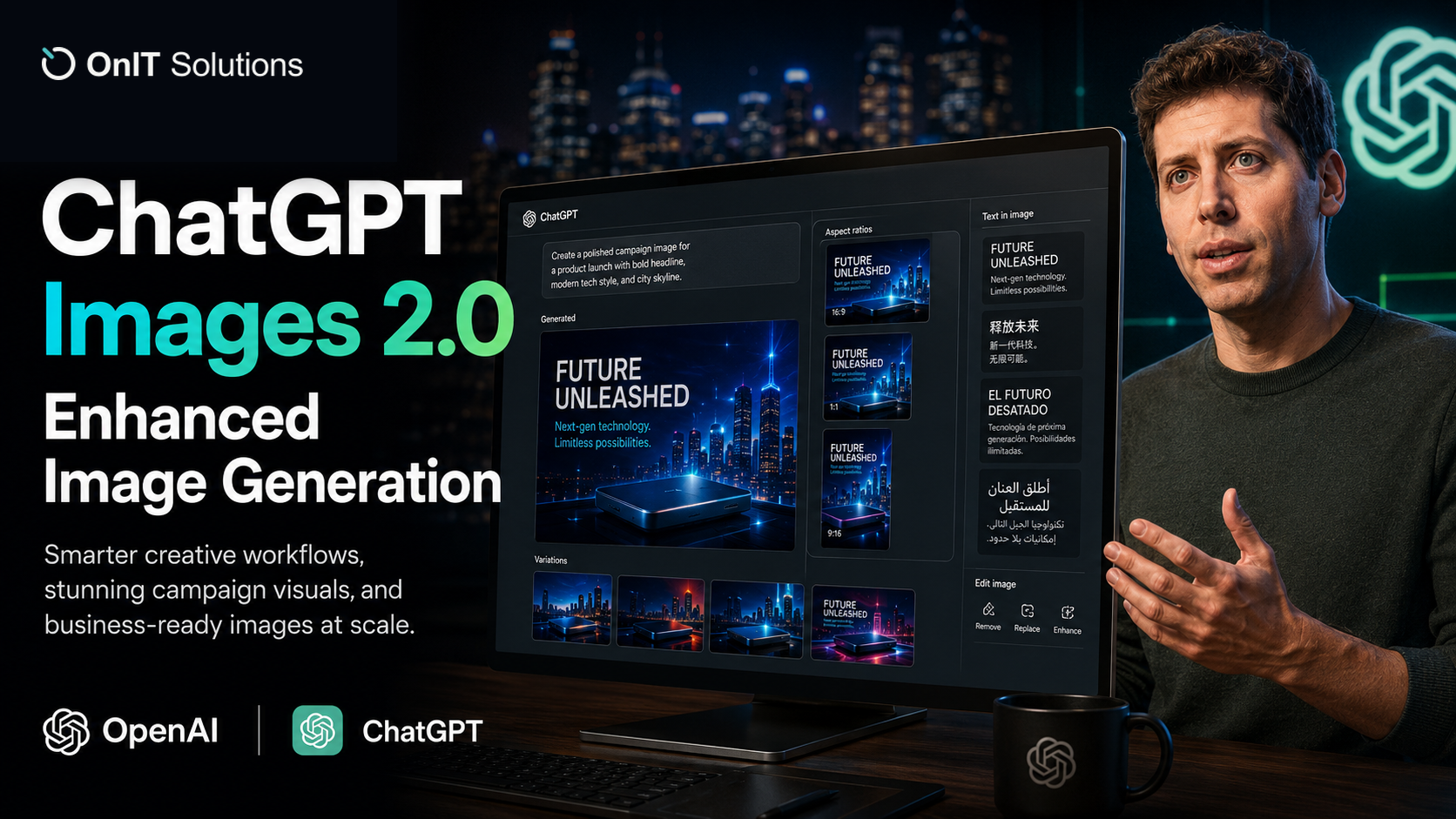
OpenAI’s latest model can now render accurate text within images in non-English languages, including Chinese and Hindi. This breakthrough addresses a persistent limitation where AI-generated visuals often struggled with non-Latin characters or produced nonsensical gibberish. By refining the multilingual AI images capability, users can now produce cohesive graphics that speak directly to global audiences without needing extensive manual post-production. For Australian firms operating in the Asia-Pacific region, this update streamlines the creation of culturally relevant assets.
Enhancing Technical Precision with GPT-4o Image Features
Internal testing by OpenAI demonstrated the model’s ability to handle intricate visual-textual tasks that were previously impossible for mainstream generators. In one specific test, the OpenAI image model successfully visualized a complex Isaac Newton physics experiment from history. This wasn't just a simple drawing; the output included a detailed illustration paired with accurate explanatory text within the same frame. Such precision ensures that technical diagrams are no longer just "vaguely correct" but functionally useful for educational and professional materials.
Strategic Benefits for Localized Marketing
Australian companies can leverage this enhanced ChatGPT image generation to create localized marketing materials for diverse domestic and international demographics. Whether designing a flyer for a bilingual community event or developing technical manuals for offshore partners, the model maintains textual integrity across different scripts. This reduces the risk of translation errors that frequently occur when text is added as a secondary layer after an image is generated. Integrating these tools into a broader AI strategy allows local businesses to scale their creative output while maintaining high standards of accuracy.
- Accurate Non-English Text: Robust support for languages like Chinese and Hindi allows for seamless global communication.
- Technical Clarity: Complex diagrams now include precise explanatory text that aligns with the visual content.
- Cultural Relevance: Localized assets can be generated as a single, cohesive file rather than using mismatched text overlays.
Beyond simple translation, the model understands the contextual relationship between the text and the visual elements it accompanies. This means the layout of the Hindi or Chinese characters is harmonized with the overall design, rather than appearing as an afterthought. For IT managers overseeing AI agent deployment, these features offer more flexibility in how automated systems communicate with end-users. The focus on complex rendering ensures that visual communication remains clear and professional regardless of the language used.
Customisation with Flexible AI Image Aspect Ratios
Users can now command the AI to produce everything from expansive panoramic scenes to narrow vertical posters by simply specifying the dimensions in their initial prompt. This update to ChatGPT image generation introduces a significant range of AI image aspect ratios, spanning from a 3:1 wide format to a 1:3 tall orientation. By integrating these size adjustments directly into the conversation, the OpenAI image model eliminates the need for external cropping tools or complex post-processing. Australian marketing teams can now create content that is natively sized for specific social media platforms or print layouts from the outset.
Precise Control with GPT-4o Image Features
Beyond simple resizing, the new model demonstrates a sophisticated ability to blend different visual elements through background overlays. One internal test showcased how the model could successfully place a technical scientific drawing onto a notebook texture, maintaining the physical context of the scene. This capability ensures that the generated assets look like they belong in a specific environment rather than being floating, disconnected graphics. For businesses developing an AI strategy, this means higher-quality visual assets that align with professional branding requirements.
These enhancements are part of a broader push to give users more creative agency over the final output's context and dimensions. By allowing for granular control over size and composition, OpenAI is positioning its latest release to compete directly with other major AI image models currently on the market. This flexibility is particularly useful for local businesses that require specific formats for billboard advertisements, website banners, or mobile-first content. Having these GPT-4o image features available in a single interface streamlines the production cycle for busy IT managers and creative leads.
Practical Applications for Business Layouts
- Panoramic Assets: Use the 3:1 wide ratio to create expansive headers for professional websites or digital signage.
- Vertical Formatting: Leverage the 1:3 tall format for mobile-optimised infographics and portrait-oriented social media content.
- Contextual Overlays: Automatically place technical illustrations onto specific backgrounds, such as paper textures, to enhance realism.
Providing this level of control ensures that the tool remains a versatile asset for both technical and creative industries. By reducing the friction between a concept and a correctly formatted final product, businesses can focus more on high-level design and less on technical troubleshooting. This structural flexibility is underpinned by the massive datasets and specific training techniques used to develop the model's underlying architecture.
Training on Licensed Data and GPT-4o Architecture
OpenAI developed the underlying GPT-4o model by training it on a joint distribution of online images and text, incorporating a mix of publicly available data and assets licensed from partners like Shutterstock Inc. This training method allows the system to understand not just what individual objects look like, but also how they relate to the language used to describe them. By studying these connections, the ChatGPT image generation process becomes significantly more intuitive, allowing the model to grasp the nuances of complex prompts. This foundation is what enables the high level of detail found in the latest GPT-4o image features.
“We trained our models on the joint distribution of online images and text, learning not just how images relate to language, but how they relate to each other,” OpenAI staffers wrote in a recent blog post. This dual-layered learning process is what makes the creation of multilingual AI images and technical diagrams possible, as the model understands the spatial relationships between text and objects. By mastering these internal connections, GPT-4o can render complex scenes that maintain structural integrity even when users request unique AI image aspect ratios.
Refining the OpenAI Image Model through RLHF
Following the initial training phase, the development team employed Reinforcement Learning from Human Feedback (RLHF) to further polish the engine's outputs. This industry-standard technique involves human trainers reviewing and ranking model responses to guide the AI toward higher quality and more accurate visual compositions. This refinement ensures that the OpenAI image model avoids common pitfalls of earlier generative tools, such as distorted anatomy or illogical object placements. For businesses, this translates to more reliable visuals that require less editing before they can be used in professional materials.
The synergy between massive datasets and human-led refinement allows GPT-4o to produce hyperrealistic and contextually relevant results that feel cohesive. The model effectively learns how different visual elements interact with each other in a physical or digital space, leading to better composition and lighting. Whether creating marketing assets or internal diagrams, these GPT-4o image features provide a level of polish that previously required manual professional design. This technical evolution ensures that every generated graphic adheres to the context of the user's specific request without losing clarity.
Practical Implications for Business Design Workflows
Integrating these advanced capabilities into a broader AI strategy allows Australian organisations to automate the creation of high-fidelity visual content. Because the model has learned the relationship between language and imagery so deeply, it can handle sophisticated requests like technical scientific drawings or layered marketing banners. The ability to maintain consistency across different dimensions is a direct result of this architectural training, where the model understands how to scale and position elements naturally. This reduces the need for multiple revisions and allows teams to focus on high-level creative direction rather than technical troubleshooting.
For IT managers and business owners, the move toward licensed data sources also highlights a growing industry focus on responsible AI development. By partnering with established entities like Shutterstock, OpenAI provides a more stable foundation for commercial users who are concerned about the origin of training data. This architectural shift marks a turning point where AI-generated content moves from being a novelty to a dependable tool for high-stakes business environments. The result is a more predictable and powerful system capable of transforming a few lines of text into professional-grade assets that accurately represent complex ideas.
Frequently Asked Questions
What is the new ChatGPT Images 2.0 model?
ChatGPT Images 2.0 is OpenAI's latest image generation model that allows users to create multiple images from a single prompt and include text in various languages. It is available globally for ChatGPT and Codex users, featuring improved composition and customisation options.
Can ChatGPT generate images with non-English text?
Yes, the new model can generate text within images in languages other than English, such as Chinese and Hindi. This is a significant upgrade from previous versions that often struggled with accurate text rendering inside generated visuals.
What aspect ratios are supported in the new ChatGPT image update?
The update allows users to customise the dimensions of their images, ranging from a 3:1 wide panoramic format to a 1:3 tall vertical format. These settings can be adjusted directly within the user's prompt to fit specific design requirements.
How was the new ChatGPT image generation model trained?
OpenAI trained the model using a combination of publicly available data and licensed assets from partners like Shutterstock. They utilised a method called Reinforcement Learning from Human Feedback (RLHF) to further refine the quality and accuracy of the chatbot's visual outputs.
Sources
- https://www.wired.com/story/openai-beefs-up-chatgpts-image-generation-model/
- https://siliconangle.com/2025/03/25/openai-upgrades-chatgpts-image-generation-capabilities
- https://openai.com/index/new-chatgpt-images-is-here/
- https://www.generativeaipub.com/p/openai-makes-chatgpts-image-generation
- https://venturebeat.com/ai/openai-makes-chatgpts-image-generation-available-as-api/
- https://venturebeat.com/orchestration/openai-makes-chatgpts-image-generation-available-as-api
Future-Proof Your Business with OnIT Solutions
Staying on top of AI and technology trends is critical for Australian SMBs. Our team helps you cut through the noise and implement the right solutions for your business. Talk to our AI Strategy team about what today's developments mean for your organisation — or explore our full range of Managed IT Services.