The term 'AI sales agent' sounds a bit like something out of a movie. Maybe even a little bit worrying if you've got a team of seasoned sales pros you really value. But what are we actually talking about here? It's not about replacing your best people with robots. Honestly, it's not. The whole point is to give your sales team superpowers, not to make them obsolete.
An AI sales agent is essentially a smart assistant that can handle a lot of the repetitive, time-consuming tasks that eat up your sales team's day. Think about it—how much time do your salespeople spend on initial outreach, qualifying leads, scheduling meetings, following up on emails? These are all things an AI agent can handle, freeing up your team to focus on what they do best: building relationships and closing deals.
But here's what most people get wrong: AI sales agents aren't about tricking people into thinking they're talking to a human. They're about being transparent, efficient, and helpful. When done right, they enhance your sales process without replacing the human relationships that actually close deals.
The Reality Behind the Hype
Let's cut through the noise. There's a lot of hype around AI sales agents right now. Some of it's justified. Some of it's not. The truth is, AI sales agents can be incredibly powerful tools, but they're not magic. They won't solve all your sales problems overnight. They won't replace your sales team. And they definitely won't work if you don't set them up properly.
What They Actually Do
An AI sales agent is software that can have conversations with potential customers. It can answer questions, qualify leads, schedule appointments, and collect information. It does this through chat interfaces, email, or even phone calls. The key is that it uses artificial intelligence—specifically large language models—to understand what people are asking and respond appropriately.
The technology has gotten really good at this. Modern AI can understand context, handle complex questions, and even detect when someone is interested versus just browsing. But it's still software. It's not a person. And that's actually a good thing.
Why Transparency Matters
Here's something that might surprise you: being upfront about using AI actually builds more trust than trying to hide it. When someone knows they're talking to an AI, they appreciate the efficiency. They get instant responses. They don't have to wait for business hours. And they know that when they need a real person, they can get one.
"We've found that customers actually prefer interacting with our AI agent for initial inquiries. They get answers immediately, and if they need to talk to a human, the handoff is seamless. Our conversion rates went up 30% after we implemented it."
That's from a client who was initially worried about using AI for customer interactions. The key was being transparent and making the handoff to humans smooth.
How AI Sales Agents Actually Work
Understanding how these systems work will help you decide if they're right for your business. It's not as complicated as it sounds, but there are some important details.
The Technology Stack
At its core, an AI sales agent uses a large language model—think ChatGPT or similar technology—to understand and respond to customer enquiries. But it's not just the AI model. The system typically includes:
- Natural language processing to understand what customers are asking
- Integration with your CRM to access customer data and update records
- Integration with your calendar system for scheduling
- Integration with your email system for follow-ups
- A knowledge base about your products, services, and policies
- Rules and workflows that define when to escalate to a human
All of these pieces work together. The AI handles the conversation, but it's pulling information from your systems and updating them as it goes.
The Conversation Flow
Here's how a typical interaction works:
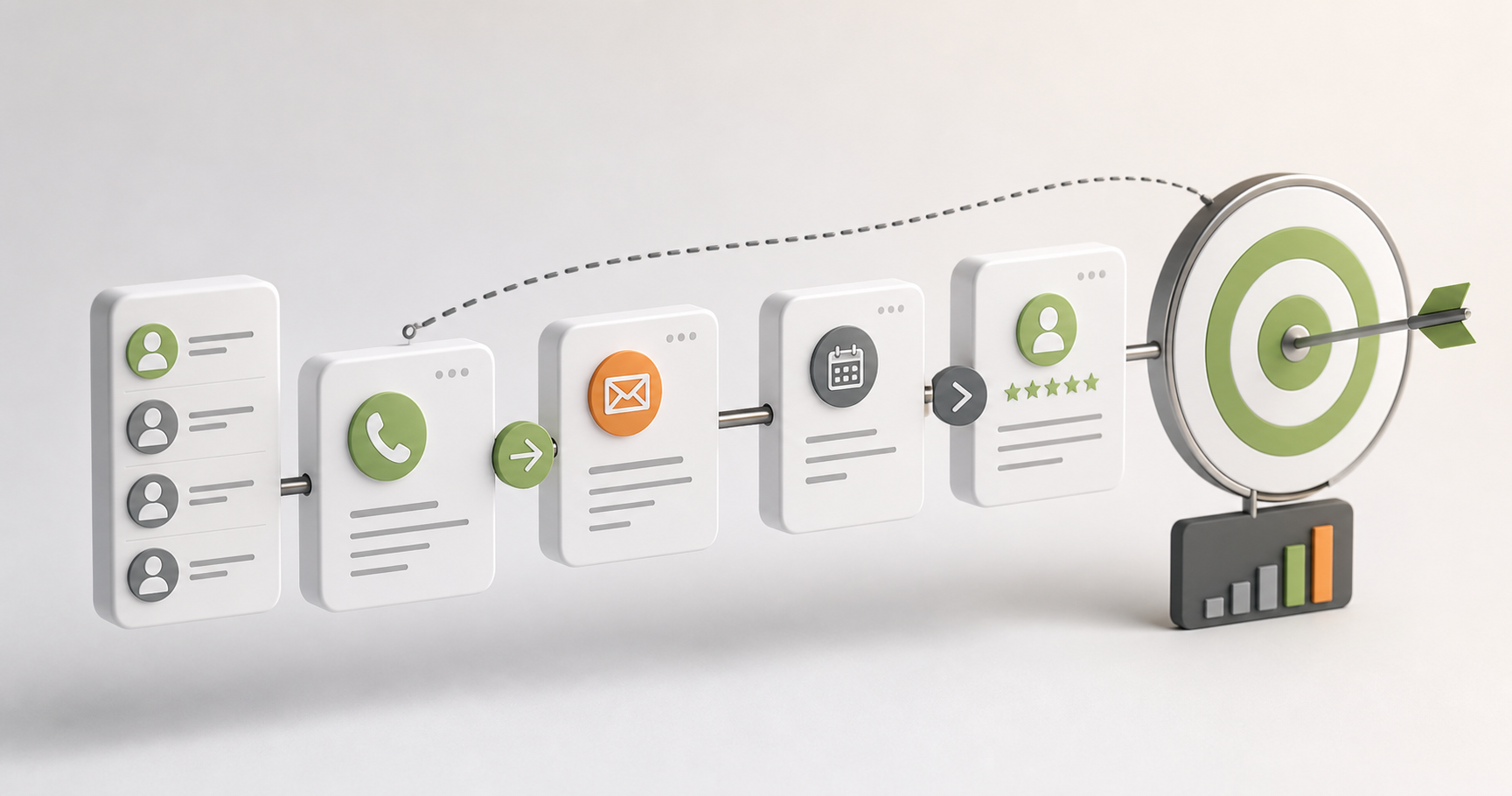
1. A potential customer reaches out—maybe through your website chat, email, or phone.
2. The AI agent greets them and asks how it can help.
3. The customer asks a question or expresses interest.
4. The AI processes the question, checks the knowledge base, and responds.
5. If the customer seems interested, the AI qualifies them—asks about budget, timeline, specific needs.
6. If they're a good fit, the AI can schedule a meeting with a human sales rep.
7. Throughout, the AI updates your CRM with all the information it's gathering.
8. If the conversation gets complex or the customer asks to speak to a human, the AI hands off seamlessly.
This all happens in real-time, 24/7, without your sales team having to be available.
The Real Value: Data and Insights
One of the biggest benefits of AI sales agents isn't just that they handle conversations—it's the data they collect. Every interaction is recorded and analyzed. You can see:
- What questions prospects ask most often
- What objections come up repeatedly
- What messaging resonates
- Where prospects drop off in the conversation
- What information helps convert leads
This data is gold for your sales team. It helps them understand what's working, what's not, and how to improve their approach. Instead of guessing what prospects care about, you have actual data.
Use Cases That Actually Work
Not every sales process is a good fit for AI agents. Here's where they really shine:
Initial Lead Qualification
This is probably the best use case. Your AI agent can handle the first contact with leads, ask qualifying questions, and only pass along the ones that are actually worth your sales team's time. This means your human salespeople spend their time on qualified leads, not tire-kickers.
"We used to have our sales team spend hours on calls with people who weren't really interested. Now the AI handles the initial qualification, and our team only talks to people who are serious. Our close rate went from 15% to 28%."
Common Question Handling
If you get the same questions over and over—pricing, features, availability—an AI agent can handle those instantly. Your sales team doesn't have to answer "what are your hours?" for the hundredth time.
Appointment Scheduling
This is huge. Instead of playing phone tag, prospects can schedule meetings directly through the AI agent. It checks your calendar, finds available slots, and books the appointment. No back-and-forth emails needed.
Follow-Up Automation
After a sales call, the AI can automatically send follow-up emails, check in on how things are going, and keep the conversation moving. It never forgets to follow up, and it does it at the right times.
Information Gathering
Before a sales call, the AI can gather information about what the prospect is looking for, what their pain points are, and what they've already learned. When your sales rep gets on the call, they're already prepared.
What They Can't Do (Yet)
It's important to be realistic. AI sales agents are powerful, but they have limits:
- They can't build deep relationships. That's still a human job.
- They struggle with highly complex, nuanced situations.
- They can't read body language or pick up on subtle cues.
- They're not great at handling angry or frustrated customers.
- They can't make judgment calls about exceptions or special cases.
The key is knowing when to hand off to a human. A good AI sales agent knows its limits and escalates appropriately.
Setting Up an AI Sales Agent That Actually Works
Just buying an AI sales agent and turning it on won't magically solve your sales problems. You need to set it up properly. Here's what that involves:
Training the AI
The AI needs to know about your business. You'll need to
- Feed it information about your products and services
- Teach it your brand voice and tone
- Give it answers to common questions
- Define your qualification criteria
- Set up your workflows and rules
This takes time. You can't just plug it in and expect it to work. But the better you train it, the better it performs.
Integration Requirements
Your AI agent needs to connect to your existing systems:
- CRM integration so it can access and update customer data
- Calendar integration for scheduling
- Email integration for follow-ups
- Knowledge base access for product information
- Analytics tools for tracking performance
The more integrated it is, the more valuable it becomes. If it's operating in isolation, it's just a fancy chatbot.
Defining Success Metrics
How will you know if it's working? You need to define success metrics
- Lead qualification rate: Are more leads being properly qualified?
- Response time: How quickly are enquiries being handled?
- Conversion rate: Are more qualified leads converting?
- Sales team efficiency: Are your salespeople spending time on better leads?
- Customer satisfaction: Are prospects happy with their interactions?
Track these from the start. Don't wait until the end to figure out if it worked.
The Human-AI Partnership Model
The most successful implementations treat AI sales agents as partners to the human sales team, not replacements. Here's how that works:
AI Handles the Routine
The AI takes care of the repetitive, time-consuming tasks
- Initial contact and greeting
- Answering common questions
- Basic qualification
- Scheduling
- Follow-up reminders
- Data entry and CRM updates
Humans Handle the Relationships
Your sales team focuses on what humans do best:
- Building rapport and trust
- Understanding complex needs
- Negotiating and closing deals
- Handling objections
- Making judgment calls
- Building long-term relationships
The handoff between AI and human should be seamless. When the AI identifies a qualified, interested lead, it should smoothly transition them to a human who's already briefed on the conversation.
Measuring the Impact
To really understand if your AI sales agent is working, you need to measure the right things. Here's what to track:
Time Savings
How much time is your sales team saving? If they were spending 10 hours a week on tasks the AI now handles, that's 10 hours they can spend on actual selling. Calculate the value of that time.
Lead Quality
Are you getting better leads? Track the quality of leads that come through the AI versus other channels. Are they more qualified? Do they convert at a higher rate?
Response Times
How quickly are you responding to enquiries? If you used to take 24 hours to respond and now it's instant, that's a huge improvement. Faster responses mean more conversions.
Conversion Rates
This is the big one. Are more leads converting? If your conversion rate goes from 10% to 15%, that's a 50% improvement. That's real value.
Cost Per Lead
What does it cost to acquire a lead through the AI agent versus other channels? If it's cheaper and the leads are better quality, that's a win.
Common Pitfalls and How to Avoid Them
Like any technology, AI sales agents can go wrong if not implemented properly. Here's what to watch out for:
Setting It and Forgetting It
AI agents need ongoing attention. You need to monitor conversations, update the knowledge base, refine responses, and adjust workflows. If you just set it up and walk away, it won't perform well.
Poor Training
If you don't train the AI properly, it won't represent your business well. Take the time to feed it good information, test its responses, and refine them.
Ignoring the Handoff
The transition from AI to human is critical. If it's clunky or the human isn't briefed, you'll lose leads. Make sure the handoff is smooth and your team knows how to pick up where the AI left off.
Over-Automating
Don't try to automate everything. Some conversations need a human touch from the start. Know when to let the AI handle it and when to bring in a human immediately.
Not Measuring
If you're not tracking performance, you won't know if it's working. Set up analytics from day one and review them regularly.
The Future of AI Sales Agents
This technology is evolving rapidly. What's possible today is already impressive, but it's going to get even better. We're seeing:
- Better understanding of context and nuance
- More natural conversations
- Better integration with sales tools
- More sophisticated qualification and routing
- Better analytics and insights
The companies that learn to use AI sales agents effectively now will have a significant advantage. They'll be able to handle more leads, qualify them better, and close more deals—all while their sales teams focus on building relationships and closing deals.
Getting Started
If you're thinking about implementing an AI sales agent, start small. Pick one use case—maybe initial lead qualification or common question handling—and do it well. Prove the concept. Build internal buy-in. Then expand.
The key is finding the right balance between automation and human touch. Get that right, and AI sales agents can transform your sales process. Get it wrong, and you'll frustrate prospects and waste money.
The bottom line? AI sales agents aren't here to replace your sales team. They're here to make your sales team more effective. They handle the grunt work, your people handle the relationships. It's a partnership, not a replacement. And when done right, it's a powerful partnership that can significantly improve your sales results.